Purple Heart Created: Washington Honors the Wounded
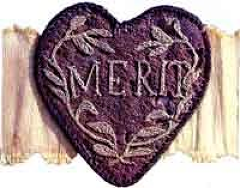
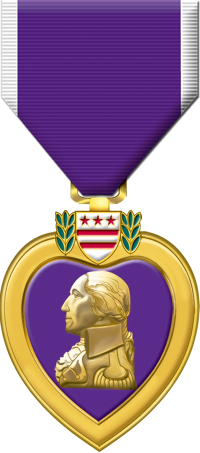
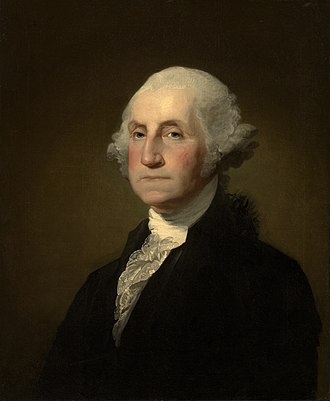
George Washington wanted to honor enlisted men, not just officers, and the result became the most recognized military decoration in the world. On August 7, 1782, Washington created the Badge of Military Merit, a purple heart-shaped cloth badge to be awarded to soldiers who demonstrated "unusual gallantry" and "extraordinary fidelity and essential service." The decoration was revolutionary in its intent: for the first time, common soldiers could receive formal recognition for their courage, a practice previously reserved for commissioned officers. Washington established the award during the closing phase of the Revolutionary War, while his army was encamped at Newburgh, New York. The original badge was a purple cloth heart edged with narrow lace or binding, worn over the left breast. Only three soldiers are confirmed to have received the Badge of Military Merit during the Revolutionary War: Sergeants Elijah Churchill, William Brown, and Daniel Bissell, all of whom had performed acts of exceptional bravery behind enemy lines. After the war, the award fell into disuse and was essentially forgotten for 150 years. Military decorations during the 19th century followed different traditions, and the Badge of Military Merit was not formally awarded during the Civil War, the Spanish-American War, or World War I. The concept persisted in military records, however, and in 1932, on the bicentennial of Washington's birth, General Douglas MacArthur revived and redesigned the award as the Purple Heart. MacArthur's version shifted the criteria from gallantry to something more solemn: the Purple Heart would be awarded to any member of the armed forces wounded or killed in action against an enemy. This transformation turned Washington's merit badge into a symbol of sacrifice rather than achievement. Nearly two million Purple Hearts have been awarded since its revival, making it one of the most widely issued and deeply personal military decorations in American history.
August 7, 1782
244 years ago
Key Figures & Places
What Else Happened on August 7
Antipater’s Macedonian forces crushed the Athenian-led coalition at the Battle of Crannon, ending the Lamian War. This defeat dismantled the last major Greek at…
Majorian was the last capable Western Roman emperor. He rebuilt the army, recovered parts of Gaul and Spain, and was planning a campaign to retake North Africa …
The Avar and Slav armies abandoned their siege of Constantinople after the Byzantine navy decimated their fleet in the Golden Horn. This failure shattered the A…
Pope Stephen III was elected in 768 and immediately turned to the Franks for military protection against the Lombards, who were threatening to swallow Rome whol…
Otto I was crowned at Charlemagne's throne in Aachen on August 7, 936, inaugurating the reign that would produce the Holy Roman Empire. He defeated the Magyars …
Filippo Brunelleschi won the commission to dome the Florence Cathedral through a design that no one had attempted since the Pantheon 1,300 years earlier. The do…
Talk to History
Have a conversation with historical figures who witnessed this era. Ask questions, explore perspectives, and bring history to life.