

World Wide Web Launched: Berners-Lee Unites the Globe
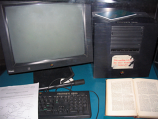
A post on an obscure internet newsgroup quietly introduced the most transformative technology since the printing press. On August 6, 1991, Tim Berners-Lee, a British physicist working at CERN in Geneva, published a summary of his World Wide Web project on the alt.hypertext newsgroup, making it available to the public for the first time. The post included a link to the world's first website, which explained what the Web was and how to use it. Almost nobody noticed. Berners-Lee had been developing the Web since 1989, when he submitted a proposal to CERN titled "Information Management: A Proposal." His supervisor's handwritten response — "Vague, but exciting" — became one of history's great understatements. The problem Berners-Lee was trying to solve was mundane: CERN's thousands of researchers used incompatible computer systems and had no efficient way to share documents. His solution combined three technologies: HTML for formatting documents, URLs for locating them, and HTTP for transferring them between computers. The Web was not the internet itself, which had existed since the late 1960s as a network connecting computers. What Berners-Lee created was a system for navigating that network intuitively, linking documents across the world through clickable text. Before the Web, using the internet required technical knowledge and command-line interfaces. After it, anyone who could point and click could access information stored on any connected computer anywhere on Earth. Berners-Lee made a decision that proved as consequential as the invention itself: he gave it away. CERN released the Web's underlying code into the public domain in April 1993, ensuring that no company or government could own the fundamental protocols. Within two years, the number of websites exploded from a handful to tens of thousands. Within a decade, the Web had restructured commerce, communication, politics, and entertainment across the planet, fulfilling and exceeding every implication of that understated CERN memo.
August 6, 1991
35 years ago
Key Figures & Places




What Else Happened on August 6
Ibrahim ibn al-Ashtar's pro-Alid forces crushed the Umayyad army at the Battle of Khazir in 686, killing the commander Ubayd Allah ibn Ziyad and shattering Umay…
Genoese galleys crushed the Pisan fleet off the Meloria shoals, capturing thousands of sailors and sinking the pride of the Pisan navy. This decisive naval coll…
Lithuanian forces crushed the Crimean Khanate’s raiding army at the Battle of Kletsk, halting a massive incursion into the Grand Duchy’s southern territories. T…
Gonzalo Jiménez de Quesada established Bogotá on the high Andean plateau, securing a permanent Spanish foothold in the interior of modern-day Colombia. This set…
Toyotomi Hideyoshi was appointed kampaku — Imperial Regent — in 1585, formalizing his status as the de facto ruler of Japan after he had already unified most of…
Portugal and the Dutch Republic signed the Treaty of The Hague, ending decades of colonial conflict over Brazil and Africa. By ceding New Holland to the Portugu…
Talk to History
Have a conversation with historical figures who witnessed this era. Ask questions, explore perspectives, and bring history to life.