Liberty's Cornerstone Laid: A Beacon Takes Shape
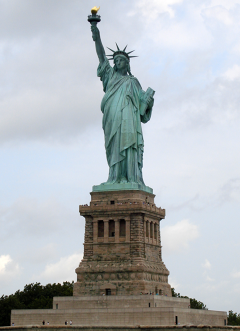
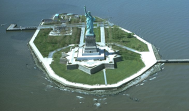
Six thousand people gathered on a small island in New York Harbor to watch the Freemasons lay a cornerstone for a monument that almost did not get built. On August 5, 1884, workers placed the foundation stone of the pedestal that would support the Statue of Liberty, a gift from the people of France that had been stalled for years by American indifference to funding its base. France was providing the statue; America was responsible for the pedestal. And America was dragging its feet. The statue itself was the vision of French political thinker Édouard de Laboulaye and sculptor Frédéric Auguste Bartholdi, conceived as a celebration of republican ideals and the Franco-American alliance. Bartholdi designed a colossal copper figure of Libertas, the Roman goddess of freedom, holding a torch and a tablet inscribed with the date of American independence. Alexandre Gustave Eiffel, who would later build his famous tower, designed the internal iron framework. Fundraising in America was the persistent problem. Congress refused to appropriate money for the pedestal. Several states declined to contribute. Many Americans saw the statue as a Parisian vanity project and questioned why they should pay to display it. The pedestal campaign was rescued largely through the efforts of newspaper publisher Joseph Pulitzer, who used his paper, The New York World, to shame wealthy Americans and solicit small donations from ordinary citizens. Pulitzer published the name of every contributor, no matter how small the gift, and eventually raised over $100,000 from more than 120,000 donors. The completed statue was dedicated on October 28, 1886, becoming an instant icon. For millions of immigrants who arrived by ship in the following decades, the statue was their first sight of America. The monument that nearly foundered on a lack of funding became the most recognized symbol of American democracy in the world.
August 5, 1884
142 years ago
Key Figures & Places
What Else Happened on August 5
A former minor nobleman who had been reduced to farming declared himself Emperor of China, and against extraordinary odds he made the claim stick. Liu Xiu, know…
Roman soldiers extinguished the fires still burning from the destruction of the Second Temple in Jerusalem in 70 AD, five days after Titus's legions breached th…
Penda of Mercia crushed the Northumbrian forces at the Battle of Maserfield, killing King Oswald and dismembering his body as a gruesome display of pagan domina…
The allied armies of Mercia and Wessex destroyed the last major Danish raiding force to invade England at the Battle of Tettenhall, killing two Danish kings and…
Ramiro II of Leon clashed with the forces of Caliph Abd al-Rahman III at the Battle of Alhandic near Zamora during the Spanish Reconquista. The engagement ended…
Robert Guiscard’s Norman forces encircled Bari, initiating a grueling three-year siege that signaled the end of Byzantine authority in Southern Italy. By starvi…
Talk to History
Have a conversation with historical figures who witnessed this era. Ask questions, explore perspectives, and bring history to life.