

Carter Creates the Department of Energy: Oil Crisis Response
Jimmy Carter signed legislation establishing the United States Department of Energy to consolidate federal power and address the nation's energy crisis following the 1973 oil embargo. This move created a single cabinet-level agency responsible for nuclear safety, fossil fuel development, and renewable research, fundamentally altering how the U.S. manages its strategic resources.
August 4, 1977
49 years ago
Key Figures & Places
President of the United States
Wikipedia
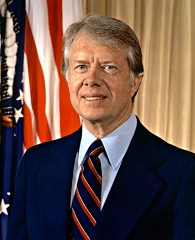
Jimmy Carter
Wikipedia

United States Department of Energy
Wikipedia
President
Wikipedia

Jimmy Carter
Wikipedia

United States Department of Energy
Wikipedia

Barack Obama
Wikipedia

Nobel Peace Prize
Wikipedia

United States
Wikipedia
Wochenzeitung
Wikipedia

The Saturday Evening Post
Wikipedia

Virus
Wikipedia

HIV/AIDS
Wikipedia

2009
Wikipedia

Yasser Arafat
Wikipedia

Palestinian
Wikipedia

Palestine Liberation Organization
Wikipedia

1994
Wikipedia
What Else Happened on August 4
Roman legions under Titus leveled the Second Temple in Jerusalem, ending the Great Jewish Revolt. This catastrophe forced Judaism to transition from a centraliz…
Valentinian I elevated his eight-year-old son Gratian to the rank of co-Augustus, formalizing a dynastic succession plan to secure the stability of the Western …
Graciano recebe o título de Augusto no governo de seu pai, Valentiniano I.
Emperor Wendi of Sui launched a massive invasion of Goguryeo (Korea) during the Manchurian monsoon season, sending his youngest son Yang Liang with a combined a…
a la muerte de Muhammad I, su hijo Al-Mundir es nombrado en Córdoba sexto emir omeya.
en la península italiana, las tropas pisanas atacan la ciudad de Amalfi.
Talk to History
Have a conversation with historical figures who witnessed this era. Ask questions, explore perspectives, and bring history to life.