Germany Declares War on Russia: WWI Ignites
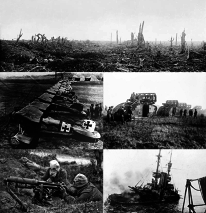
A single telegram from Berlin to St. Petersburg turned a regional crisis into a continental catastrophe. Germany's declaration of war against Russia on August 1, 1914, transformed what had been a dispute between Austria-Hungary and Serbia into the opening act of the deadliest conflict the world had yet seen. The declaration came just hours after Germany ordered full military mobilization, a process so vast and precisely scheduled that its own momentum made diplomacy nearly impossible. The crisis had been building for five weeks since the assassination of Archduke Franz Ferdinand in Sarajevo. Austria-Hungary, backed by Germany's infamous "blank check" of unconditional support, issued a deliberately unacceptable ultimatum to Serbia. Russia, bound by Slavic solidarity and treaty obligations, began mobilizing in defense of Serbia. The interlocking alliance system, rigid mobilization timetables, and decades of arms buildups had created a Europe where one pulled thread could unravel everything. German war planning left no room for a limited eastern conflict. The Schlieffen Plan demanded that France be knocked out first through a rapid invasion via Belgium before Russia could fully mobilize its enormous but slow-moving army. Declaring war on Russia therefore meant Germany would also attack France within days, which in turn would bring Britain into the conflict to defend Belgian neutrality. The dominoes fell with mechanical precision. By the time the guns finally fell silent in November 1918, roughly 20 million people were dead, four empires had collapsed, and the political map of Europe and the Middle East had been permanently redrawn. That single declaration of war opened a wound in Western civilization that would take another world war to begin to close.
August 1, 1914
112 years ago
Key Figures & Places

What Else Happened on August 1
Octavian stormed Alexandria on August 1, 30 BC, executing Marcus Antonius Antyllus and seizing the last independent kingdom of the Hellenistic world for Rome. C…
Octavian arrived in Alexandria and Cleopatra was already dead. She had killed herself three days earlier — asp or hairpin, the sources disagree. Mark Antony had…
Gaius Julius Civilis, a Romanized Batavian officer who had served in the Roman auxiliary forces for twenty-five years, turned his military training against the …
Justinian I didn't inherit a stable empire — he was handed one bankruptcy away from collapse. When he became sole ruler in 527, he immediately set about rebuild…
Japan's Empress Suiko needed the Sui emperor to take her seriously. She dispatched a scholar named Ono no Imoko to China's court with a letter that opened: "The…
The Aghlabid army breached the walls of Taormina, crushing the final Byzantine outpost in Sicily. This conquest solidified Islamic control over the island, shif…
Talk to History
Have a conversation with historical figures who witnessed this era. Ask questions, explore perspectives, and bring history to life.