
First U.S. Patent Issued: Innovation's Legal Dawn
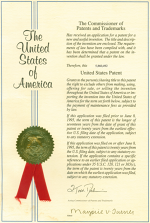
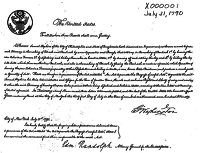
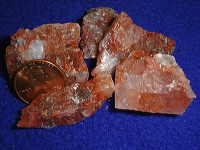
Samuel Hopkins of Pittsford, Vermont, received Patent No. 1 on July 31, 1790, for a process of making potash and pearl ash, chemicals essential for manufacturing soap, glass, and fertilizer. The document, signed by George Washington, Thomas Jefferson, and Attorney General Edmund Randolph, established a principle that would fuel American innovation for the next two centuries: inventors deserve legal protection for their ideas. The Constitution had authorized Congress to "promote the Progress of Science and useful Arts, by securing for limited Times to Authors and Inventors the exclusive Right to their respective Writings and Discoveries." The Patent Act of 1790, signed into law by Washington on April 10, translated that clause into practical legislation. The act created a patent board consisting of the Secretary of State, the Secretary of War, and the Attorney General, who were charged with evaluating applications and granting patents for "sufficiently useful and important" inventions. Hopkins's potash process was economically significant, if not glamorous. Potash, derived from wood ash, was one of colonial America's most valuable exports to Britain, used in textile manufacturing, soap production, and glassmaking. Hopkins's method of extracting and purifying the chemicals represented an improvement over existing techniques, though the exact details of his innovation are lost because the original patent was destroyed when the British burned Washington in 1814. The early patent system was intentionally rigorous. Jefferson, who served as the first de facto patent examiner, personally investigated each application to ensure genuine novelty. Only three patents were granted in 1790. The workload quickly became unmanageable for cabinet officers, and Congress overhauled the system in 1793, replacing examination with a simpler registration process. A full examination system was restored in 1836 with the creation of the Patent Office. From Hopkins's potash to modern pharmaceutical compounds and software algorithms, the American patent system has issued over eleven million patents, creating a legal framework that incentivized everyone from Eli Whitney to Thomas Edison to take the risk of inventing something new.
July 31, 1790
236 years ago
Key Figures & Places
patent
Wikipedia
U.S.
Wikipedia
Samuel Hopkins (inventor)
Wikipedia
potash
Wikipedia
Patent
Wikipedia
Samuel Hopkins (inventor)
Wikipedia
Potash
Wikipedia
United States
Wikipedia
Kaliumcarbonat
Wikipedia
President
Wikipedia
George Washington
Wikipedia
United States Secretary of State
Wikipedia
Thomas Jefferson
Wikipedia
What Else Happened on July 31
Mark Antony led a cavalry charge out of Alexandria on July 31, 30 BC, and routed Octavian's horsemen in what would be the last Roman victory he ever won. By nig…
Ash rained down on the surrounding plains as Mount Fuji erupted for the first time in recorded history. This event established the volcano’s status as an active…
Mount Fuji erupted for the first recorded time, spewing ash and debris that blanketed the surrounding plains. This geological event forced local communities to …
The largest naval raid in Byzantine history arrived with 54 Arab ships commanded by Leo of Tripoli, a Greek convert to Islam who knew exactly which harbor defen…
Pietro Martino Boccapecora took the name Sergius IV when he became pope — but everyone still called him "Pig's Snout" behind his back. His birth name meant exac…
A 300-pound Byzantine nobleman convinced himself he could overthrow Emperor Alexios III by simply showing up at the palace. John Komnenos the Fat—his actual his…
Talk to History
Have a conversation with historical figures who witnessed this era. Ask questions, explore perspectives, and bring history to life.