Lafayette Joins the Revolution: French Aid Secured
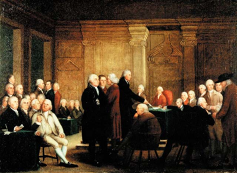
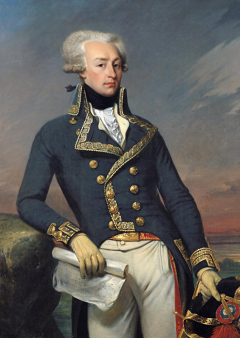
The Continental Congress commissioned a nineteen-year-old French aristocrat as a major general of the Continental Army on July 31, 1777, a decision that seemed absurd on paper and proved transformational in practice. The Marquis de Lafayette had no military experience, barely spoke English, and had defied his king to reach America, but he would become George Washington's most trusted foreign officer and the living symbol of the Franco-American alliance. Marie-Joseph Paul Yves Roch Gilbert du Motier, Marquis de Lafayette, was born into one of France's wealthiest families and orphaned young, inheriting a fortune that made him one of the richest teenagers in Europe. He purchased a commission in the French army at age thirteen but burned with a desire for glory and liberty that garrison duty could not satisfy. When he learned of the American rebellion against Britain, he saw his cause. King Louis XVI, not yet ready to openly support the Americans, forbade Lafayette from going. Lafayette bought a ship with his own money and sailed anyway. He arrived in South Carolina in June 1777 and traveled to Philadelphia, where he presented himself to a Continental Congress that was thoroughly exhausted by the parade of self-promoting European officers demanding high rank and salary. Lafayette made an offer Congress could not refuse: he would serve at his own expense and asked only for the honor of fighting alongside Americans. Congress, recognizing both his sincerity and his political value as a prominent French nobleman, granted him the rank of major general. Washington, initially skeptical of yet another foreign volunteer, quickly grew to regard Lafayette almost as a son. Lafayette was wounded at Brandywine in September 1777, suffered through Valley Forge, and commanded troops with increasing competence at Barren Hill and Monmouth. His greatest contribution was diplomatic: his presence in America helped persuade Louis XVI to sign the Treaty of Alliance in 1778, bringing French troops, ships, and money into the war. French military support proved decisive at Yorktown in 1781, where Lafayette's forces helped trap Cornwallis, ending the war. The teenager who bought his own ship became the indispensable link between two revolutions.
July 31, 1777
249 years ago
Key Figures & Places
What Else Happened on July 31
Mark Antony led a cavalry charge out of Alexandria on July 31, 30 BC, and routed Octavian's horsemen in what would be the last Roman victory he ever won. By nig…
Ash rained down on the surrounding plains as Mount Fuji erupted for the first time in recorded history. This event established the volcano’s status as an active…
Mount Fuji erupted for the first recorded time, spewing ash and debris that blanketed the surrounding plains. This geological event forced local communities to …
The largest naval raid in Byzantine history arrived with 54 Arab ships commanded by Leo of Tripoli, a Greek convert to Islam who knew exactly which harbor defen…
Pietro Martino Boccapecora took the name Sergius IV when he became pope — but everyone still called him "Pig's Snout" behind his back. His birth name meant exac…
A 300-pound Byzantine nobleman convinced himself he could overthrow Emperor Alexios III by simply showing up at the palace. John Komnenos the Fat—his actual his…
Talk to History
Have a conversation with historical figures who witnessed this era. Ask questions, explore perspectives, and bring history to life.