Indira Gandhi Becomes India's Third Prime Minister
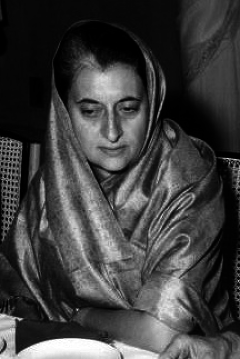
Indira Gandhi was not supposed to become prime minister. When Lal Bahadur Shastri died suddenly on January 11, 1966, the Congress Party bosses chose her precisely because they thought she would be easy to control. She was the daughter of Jawaharlal Nehru, India's first prime minister, but she had no independent political base and little administrative experience. The party leadership, known informally as the "Syndicate," expected a pliable figurehead. They were catastrophically wrong. Gandhi was elected leader of the Congress Parliamentary Party on January 19, 1966, defeating Morarji Desai by a vote of 355 to 169. She was forty-eight years old and the first woman to lead the world's largest democracy. Within three years, she had outmaneuvered the Syndicate, split the Congress Party, and consolidated personal control over the Indian government to a degree that her father had never attempted. Her early tenure was marked by decisive action in foreign policy. The 1971 war with Pakistan, fought over the independence movement in East Pakistan, resulted in a swift Indian victory and the creation of Bangladesh. The military success transformed Gandhi's image domestically and internationally, establishing India as the dominant power in South Asia. She followed this with India's first nuclear test in 1974, code-named "Smiling Buddha," which demonstrated India's weapons capability and announced its arrival as a nuclear state. The paradox of Gandhi's rule was that she simultaneously strengthened India's international standing and undermined its democratic institutions. Facing political opposition, corruption charges, and a court ruling that invalidated her 1971 election, she declared a state of emergency in June 1975. For twenty-one months, civil liberties were suspended, the press was censored, political opponents were jailed, and a forced sterilization campaign was carried out under her son Sanjay's direction. When she finally called elections in 1977, expecting vindication, voters ejected her from office in a landslide. She returned to power in 1980 and served until October 31, 1984, when her Sikh bodyguards assassinated her in retaliation for her decision to order a military assault on the Golden Temple in Amritsar, Sikhism's holiest shrine. Her death triggered anti-Sikh riots across India that killed an estimated 3,000 people. Gandhi remains one of the most consequential and divisive leaders of the twentieth century, a figure who expanded India's power while concentrating it dangerously in her own hands.
January 19, 1966
60 years ago
Key Figures & Places
What Else Happened on January 19
Twelve legions. A single moment. When Gratian tapped Theodosius to command Rome's entire eastern frontier, he wasn't just promoting a general—he was handing ove…
Clovis II ascended the throne of Neustria and Burgundy at age five, following the death of his father, Dagobert I. His long minority empowered the palace mayors…
Twelve days into the siege, water ran low. The Kucha defenders watched their wells shrink, their hope evaporating faster than their precious liquid. Ashina She'…
Rouen surrendered to Henry V after a brutal six-month siege, placing the heart of Normandy under English control. This victory dismantled the last major bastion…
The Byzantine throne wasn't big enough for just one Palaiologos. John VIII, barely out of his teens, was thrust into imperial politics through a strategic marri…
A tiny Italian fortress, barely bigger than a village, stood no chance against the thundering French artillery. But Mirandola wasn't just any town—it was the pr…
Talk to History
Have a conversation with historical figures who witnessed this era. Ask questions, explore perspectives, and bring history to life.