

72% of America Watches Lucy Give Birth on TV
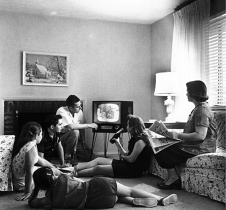
More Americans watched Lucy Ricardo give birth on television than watched the inauguration of President Dwight D. Eisenhower the following morning. The January 19, 1953, episode of I Love Lucy drew 44 million viewers, representing 71.7 percent of all television sets in the country, a share that no scripted television program has matched since. The episode's extraordinary viewership was driven by a collision of real life and fiction that CBS had been building toward for months. Lucille Ball, the show's star, was actually pregnant with her second child, Desi Arnaz Jr. The show's writers had incorporated her pregnancy into the storyline, a decision that was itself groundbreaking. Television networks considered pregnancy too indelicate for family entertainment, and CBS required every script to be reviewed by a priest, a rabbi, and a minister to ensure nothing offensive aired. The word "pregnant" was banned from the dialogue; Lucy was described as "expecting." The timing was orchestrated with surgical precision. Ball gave birth to Desi Arnaz Jr. by planned Cesarean section on the morning of January 19, the same day the pre-recorded episode showing Lucy Ricardo giving birth to "Little Ricky" aired in prime time. Newspapers ran the fictional and real births side by side, and the convergence generated a media sensation that no publicity campaign could have manufactured. I Love Lucy was already the most popular show on television before the pregnancy storyline. Ball and her husband Desi Arnaz had revolutionized the medium by insisting on filming before a live studio audience using three cameras simultaneously, a technique that became the standard for sitcom production for the next fifty years. They also insisted on owning the show through their production company, Desilu, a business decision that made them enormously wealthy and gave them control over the show's syndication rights. The birth episode demonstrated television's power to create shared national experiences. In 1953, the medium was still young; roughly half of American households owned a set. The fact that nearly three-quarters of those sets were tuned to the same program at the same moment revealed that television could command attention at a scale that radio and film had never achieved. Ball and Arnaz divorced in 1960, but the show they built endures. I Love Lucy has been in continuous syndication since its original run, and the birth episode remains a landmark in American broadcasting.
January 19, 1953
73 years ago
Key Figures & Places





What Else Happened on January 19
Twelve legions. A single moment. When Gratian tapped Theodosius to command Rome's entire eastern frontier, he wasn't just promoting a general—he was handing ove…
Clovis II ascended the throne of Neustria and Burgundy at age five, following the death of his father, Dagobert I. His long minority empowered the palace mayors…
Twelve days into the siege, water ran low. The Kucha defenders watched their wells shrink, their hope evaporating faster than their precious liquid. Ashina She'…
Rouen surrendered to Henry V after a brutal six-month siege, placing the heart of Normandy under English control. This victory dismantled the last major bastion…
The Byzantine throne wasn't big enough for just one Palaiologos. John VIII, barely out of his teens, was thrust into imperial politics through a strategic marri…
A tiny Italian fortress, barely bigger than a village, stood no chance against the thundering French artillery. But Mirandola wasn't just any town—it was the pr…
Talk to History
Have a conversation with historical figures who witnessed this era. Ask questions, explore perspectives, and bring history to life.