

Soviets Liberate Lodz: Only 900 of 200,000 Jews Survive
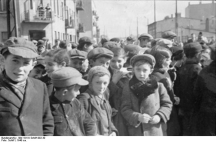
When Soviet troops entered Lodz on January 19, 1945, they found fewer than 900 Jews alive in a city that had contained one of the largest Jewish communities in Europe. The Lodz Ghetto, sealed by the Germans in April 1940, had held more than 200,000 people at its peak. By the time of liberation, nearly all of them were dead, killed by starvation, disease, or deportation to the Chelmno and Auschwitz extermination camps. The ghetto was unique among Nazi-imposed ghettos for both its longevity and the strategy of its controversial Jewish leader, Chaim Rumkowski. Appointed by the Germans as head of the Judenrat, the Jewish council that administered the ghetto's internal affairs, Rumkowski pursued a policy of "salvation through labor," arguing that making the ghetto indispensable to the German war effort would keep its inhabitants alive. He organized the ghetto into a vast industrial operation, with factories producing textiles, leather goods, metal products, and other supplies for the Wehrmacht. The strategy bought time but could not prevent the deportations. In early 1942, the Germans began transporting ghetto residents to the Chelmno death camp, where they were murdered in gas vans. Rumkowski cooperated with the selection process, delivering the elderly, the sick, and children under ten in a desperate attempt to save the working-age population. His speech of September 4, 1942, asking parents to surrender their children, remains one of the most harrowing documents of the Holocaust: "Give me your children... I must cut off limbs in order to save the body." The ghetto survived longer than almost any other in Nazi-occupied Europe, functioning until August 1944, when the Germans liquidated the remaining 67,000 inhabitants. Most were transported to Auschwitz-Birkenau, where the majority were gassed on arrival. Rumkowski himself was sent to Auschwitz on one of the last transports and is believed to have been killed there, though accounts of his death vary. The fewer than 900 survivors found by Soviet forces had been kept alive to clean up the ghetto. Some had hidden in bunkers and attics during the final liquidation. The industrial complex that Rumkowski had built to save lives had merely prolonged the dying. Lodz stands as evidence of the fundamental futility of negotiating with a regime whose objective was total annihilation.
January 19, 1945
81 years ago
Key Figures & Places
Nazism
Wikipedia
Red Army
Wikipedia
Łódź ghetto
Wikipedia
Łódź ghetto
Wikipedia

Red Army
Wikipedia

Łódź Ghetto
Wikipedia

Nazism
Wikipedia

Klaus Barbie
Wikipedia

Gestapo
Wikipedia

Lyon
Wikipedia

War crime
Wikipedia

Bolivia
Wikipedia

World War II
Wikipedia

Łódź
Wikipedia

Ocupação japonesa da Birmânia
Wikipedia
What Else Happened on January 19
Twelve legions. A single moment. When Gratian tapped Theodosius to command Rome's entire eastern frontier, he wasn't just promoting a general—he was handing ove…
Clovis II ascended the throne of Neustria and Burgundy at age five, following the death of his father, Dagobert I. His long minority empowered the palace mayors…
Twelve days into the siege, water ran low. The Kucha defenders watched their wells shrink, their hope evaporating faster than their precious liquid. Ashina She'…
Rouen surrendered to Henry V after a brutal six-month siege, placing the heart of Normandy under English control. This victory dismantled the last major bastion…
The Byzantine throne wasn't big enough for just one Palaiologos. John VIII, barely out of his teens, was thrust into imperial politics through a strategic marri…
A tiny Italian fortress, barely bigger than a village, stood no chance against the thundering French artillery. But Mirandola wasn't just any town—it was the pr…
Talk to History
Have a conversation with historical figures who witnessed this era. Ask questions, explore perspectives, and bring history to life.