Medicare Signed: Healthcare for Millions Begins
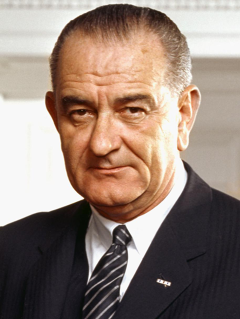
President Lyndon Johnson flew to Independence, Missouri, on July 30, 1965, to sign the Social Security Amendments in the presence of 81-year-old Harry Truman, who had first proposed national health insurance two decades earlier and been savaged as a socialist for it. Medicare and Medicaid were born that afternoon, and American healthcare was permanently transformed. Truman had sent a national health insurance proposal to Congress in November 1945, weeks after the end of World War II. The American Medical Association mounted one of the most expensive lobbying campaigns in history to defeat it, branding the plan as socialized medicine and linking it to Soviet communism. The bill died, and every subsequent attempt at universal coverage failed for the same reasons: physician opposition, insurance industry lobbying, and Cold War fears of government overreach. Johnson, who possessed legislative skills that Truman had lacked, chose a narrower target. Rather than attempting universal coverage, he focused on Americans over sixty-five and the very poor, populations that private insurers found unprofitable and that generated widespread public sympathy. He leveraged his landslide 1964 election victory and the largest Democratic congressional majority in a generation to push the legislation through. Medicare Part A covered hospital insurance financed through payroll taxes. Part B offered optional medical insurance subsidized by general revenues. Medicaid, administered jointly by federal and state governments, provided coverage for low-income Americans regardless of age. The combined program represented the largest expansion of the federal social safety net since Social Security itself was enacted in 1935. The AMA had fought Medicare to the bitter end, but within a year of implementation, physicians discovered that the program paid generously and reliably. Hospital revenues surged. By the end of its first year, Medicare had enrolled 19 million Americans. Today, the program covers over 65 million people and accounts for roughly 20 percent of all U.S. health spending, constituting the largest single health insurance program in the world.
July 30, 1965
61 years ago
Key Figures & Places
What Else Happened on July 30
Theodore commanded 90,000 Byzantine troops against 30,000 Arab cavalry near Beit Shemesh. He lost. The July heat turned the valley into a killing ground—Byzanti…
Caliph Al-Mansur ordered the construction of Baghdad on the banks of the Tigris, establishing a circular city designed to serve as the administrative heart of t…
A crowd threw seven city councilmen out of a window. That's it. That's how the Hussite Wars started in 1419—not with a declaration or a battlefield, but with ra…
The largest canoe Columbus had ever seen—eight feet wide, carved from a single tree trunk—appeared off Guanaja carrying twenty-five Maya traders. They offered c…
Two Iroquois chiefs died from a single arquebus shot fired by Samuel de Champlain at Ticonderoga in 1609. He'd sided with the Huron and Algonquin against their …
Samuel de Champlain fired his arquebus at a group of Iroquois warriors near Ticonderoga on July 30, 1609, killing two chiefs instantly while supporting his Huro…
Talk to History
Have a conversation with historical figures who witnessed this era. Ask questions, explore perspectives, and bring history to life.