House of Burgesses: Democracy Takes Root in Virginia
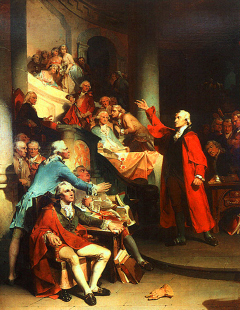
Twenty-two men assembled inside a wooden church in Jamestown, Virginia, on July 30, 1619, sat down in the choir stalls, and began to legislate. The House of Burgesses, the first representative assembly in the Western Hemisphere, convened twelve years after the founding of Jamestown and 157 years before the Declaration of Independence. The Virginia Company of London, the joint-stock corporation that controlled the colony, had authorized the assembly as a practical concession. Earlier attempts to govern Virginia through martial law and appointed councils had produced mutiny, starvation, and near-abandonment. Sir Edwin Sandys, the company's new treasurer, believed that giving colonists a voice in their own governance would attract settlers and stabilize the struggling enterprise. Governor Sir George Yeardley arrived in Virginia in April 1619 with instructions to establish the new body. Each of the eleven major settlements, or "plantations," elected two burgesses to represent them. These men were exclusively white, male, English, and property-owning. Their speaker was John Pohl, and they met alongside the governor's appointed council, forming a General Assembly that functioned as both legislature and court. The sweltering July heat inside the church was so intense that the first session lasted only six days before being adjourned due to illness. The assembly immediately began passing laws governing relations with the Powhatan Confederacy, regulating tobacco prices, mandating church attendance, and setting moral standards for colonists. Their legislative power was limited, as the Virginia Company and the Crown could veto any act. But the principle of consent was established: Virginians would be governed, at least in part, by men they chose themselves. The same month the Burgesses first met, a ship carrying enslaved Africans arrived at Point Comfort, Virginia. Representative democracy and chattel slavery entered English North America in the same summer of 1619, a coincidence that defined the contradictions of American history for the next four centuries.
July 30, 1619
407 years ago
Key Figures & Places
What Else Happened on July 30
Theodore commanded 90,000 Byzantine troops against 30,000 Arab cavalry near Beit Shemesh. He lost. The July heat turned the valley into a killing ground—Byzanti…
Caliph Al-Mansur ordered the construction of Baghdad on the banks of the Tigris, establishing a circular city designed to serve as the administrative heart of t…
A crowd threw seven city councilmen out of a window. That's it. That's how the Hussite Wars started in 1419—not with a declaration or a battlefield, but with ra…
The largest canoe Columbus had ever seen—eight feet wide, carved from a single tree trunk—appeared off Guanaja carrying twenty-five Maya traders. They offered c…
Two Iroquois chiefs died from a single arquebus shot fired by Samuel de Champlain at Ticonderoga in 1609. He'd sided with the Huron and Algonquin against their …
Samuel de Champlain fired his arquebus at a group of Iroquois warriors near Ticonderoga on July 30, 1609, killing two chiefs instantly while supporting his Huro…
Talk to History
Have a conversation with historical figures who witnessed this era. Ask questions, explore perspectives, and bring history to life.