

Watergate Impeachment: House Committee Votes
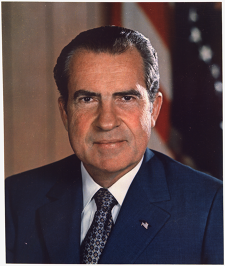
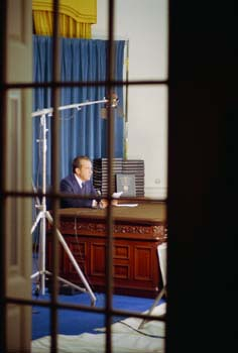
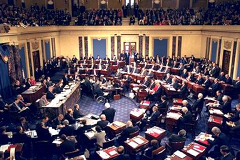
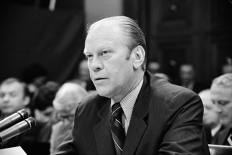
Twenty-seven members of the House Judiciary Committee voted to recommend impeaching a sitting president for the first time since Andrew Johnson, charging Richard Nixon with obstruction of justice for his role in covering up the Watergate break-in. The bipartisan vote of 27 to 11 included six Republicans who broke with their party to support the article, signaling that Nixon's political support had eroded beyond recovery. The committee had spent months hearing testimony and reviewing evidence, including edited transcripts of White House tape recordings that Nixon had released under pressure. Chairman Peter Rodino of New Jersey managed the proceedings with deliberate restraint, understanding that the committee's credibility depended on appearing judicial rather than partisan. The televised debates drew enormous audiences, with millions of Americans watching representatives argue constitutional principles in prime time. The first article of impeachment charged Nixon with making false or misleading statements to investigators, withholding evidence, counseling witnesses to testify falsely, interfering with the FBI and the CIA, and approving the payment of hush money to the Watergate burglars. The evidence showed a pattern of obstruction beginning within days of the June 17, 1972, break-in at Democratic National Committee headquarters and continuing for more than two years through increasingly desperate and illegal measures. The committee subsequently approved two additional articles: abuse of power, for using the IRS, FBI, and Secret Service against political opponents, and contempt of Congress, for refusing to comply with committee subpoenas. A proposed fourth article addressing the secret bombing of Cambodia failed to pass, revealing the limits of bipartisan consensus. Nixon's remaining defenders argued that the evidence was circumstantial and that the president's conversations, heard in isolation, could be interpreted innocently. That argument collapsed entirely on August 5 when the Supreme Court forced release of the unedited tapes, including the devastating June 23, 1972, recording in which Nixon personally directed the cover-up. Nixon resigned three days later, never facing a Senate trial.
July 27, 1974
52 years ago
Key Figures & Places
What Else Happened on July 27
Siward the Stout marched 10,000 men across the Firth of Forth hunting a king who'd ruled Scotland for fourteen years. Macbeth met him somewhere in the highlands…
The German Emperor arrived with 100,000 crusaders at a city that couldn't possibly feed them all. Friedrich Barbarossa's army descended on Niš in July 1189, and…
Georgian forces crushed the Sultanate of Rum at the Battle of Basian, securing their dominance over the Caucasus. This victory halted the westward expansion of …
Philip II of France crushed the coalition forces of King John of England and the Holy Roman Empire at the Battle of Bouvines, ending the Angevin Empire’s domina…
Twenty-seven years old, leading three hundred horsemen. That's all Osman I commanded when he crossed into Byzantine Nicomedia's farmlands on July 27, 1299. A ca…
A 2,000-man Byzantine force marched to relieve Nicomedia, besieged by Osman I's warriors. They never made it. On July 27, 1302, near Bapheus, Ottoman cavalry sh…
Talk to History
Have a conversation with historical figures who witnessed this era. Ask questions, explore perspectives, and bring history to life.