

Concorde Crashes: Supersonic Dream Ends in Flames
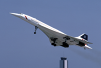
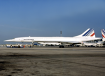
A four-inch metal strip lying on the runway at Charles de Gaulle Airport struck the tire of Air France Flight 4590 during takeoff, blew out the tire, and sent a chunk of rubber into the fuel tank above it with enough force to rupture the structure. Jet fuel sprayed from the wing and ignited instantly. The Concorde, trailing a massive plume of fire, staggered into the air, lost power in two of its four engines, and crashed into a small hotel in the town of Gonesse less than two minutes after leaving the ground. All 109 people aboard and four on the ground were killed. The Concorde had been flying commercially since 1976, carrying passengers between Paris and New York or London and New York at twice the speed of sound. Only twenty were ever built, and by 2000 only thirteen remained in service with Air France and British Airways. The aircraft was a technological marvel but an economic anachronism, burning fuel at four times the rate of conventional jets while carrying fewer than a hundred passengers. Only the prestige of supersonic travel and the willingness of wealthy travelers to pay premium fares kept the program alive. The metal strip had fallen from the thrust reverser of a Continental Airlines DC-10 that had departed minutes earlier. French investigators determined that the tire debris struck the underside of the wing with such force that it created a pressure wave inside the fuel tank, rupturing it from within. The design had no redundancy for this scenario. Fuel spilling over the hot engines ignited before the crew had any chance to respond. Both Air France and British Airways grounded their Concorde fleets immediately. After modifications to the fuel tanks and tires, limited service resumed in November 2001, but the economics never recovered. Both airlines permanently retired the Concorde in October 2003. Supersonic commercial aviation, which had seemed like the inevitable future of air travel in 1969, ended with a piece of scrap metal on a runway.
July 25, 2000
26 years ago
Key Figures & Places
What Else Happened on July 25
Diocletian elevated his fellow soldier Maximian to the rank of Caesar, splitting the Roman Empire into eastern and western administrative halves. This pragmatic…

Roman legions in the rain-soaked garrison town of Eboracum acclaimed a young officer as emperor moments after his father drew his last breath, launching a polit…
The Senate built Constantine's victory arch by stealing from older monuments. Trajan's sculptures, Hadrian's medallions, Marcus Aurelius's panels—all pried loos…
The Slavs brought siege towers taller than the city's double walls. For three days in 677, they hurled themselves at Thessalonica's defenses—the Byzantine Empir…
Charles the Bald issued the Edict of Pistres, mandating the construction of fortified bridges across the Seine and other major rivers to block Viking longships …
Wang Geon seized the throne to establish the Goryeo Dynasty after his soldiers deposed the erratic King Gung Ye. This transition unified the Korean Peninsula un…
Talk to History
Have a conversation with historical figures who witnessed this era. Ask questions, explore perspectives, and bring history to life.