First IVF Baby Born: Louise Brown Enters the World
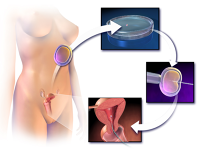
A five-pound, twelve-ounce baby delivered by planned caesarean section at Oldham General Hospital became the most consequential birth of the twentieth century. Louise Joy Brown was the first human being conceived outside a mother's body, and her arrival proved that in vitro fertilization could produce a healthy child after more than a decade of failed attempts, scientific ridicule, and ethical controversy. Physiologist Robert Edwards and gynecologist Patrick Steptoe had been collaborating on IVF since the late 1960s, pursuing an idea that most of the medical establishment considered impossible or immoral. Edwards had figured out how to fertilize a human egg in a laboratory dish by 1969, but the challenge of implanting the resulting embryo into a uterus and sustaining a pregnancy defeated them repeatedly. The pair were denied government funding by the Medical Research Council, which questioned both the science and the ethics, forcing them to rely on private donations. Lesley Brown, a thirty-year-old Bristol woman, had been trying to conceive for nine years. Blocked fallopian tubes made natural conception impossible. Steptoe retrieved a single egg from her ovary using a laparoscope, Edwards fertilized it with her husband John's sperm in a petri dish, and two and a half days later they transferred the embryo to her uterus. The pregnancy proceeded normally, though the team kept it secret for months to avoid media pressure. The birth triggered immediate ethical debate. Religious leaders condemned the procedure as tampering with creation. Bioethicists warned about the commodification of human reproduction. Headlines alternated between calling Louise a "miracle baby" and a "test-tube baby," a term Edwards despised. The Browns received hate mail alongside thousands of congratulatory letters. More than twelve million children have been born through IVF since 1978. Edwards received the Nobel Prize in Physiology or Medicine in 2010, thirty-two years after the discovery he was told would never work.
July 25, 1978
48 years ago
Key Figures & Places
What Else Happened on July 25
Diocletian elevated his fellow soldier Maximian to the rank of Caesar, splitting the Roman Empire into eastern and western administrative halves. This pragmatic…
Roman legions in the rain-soaked garrison town of Eboracum acclaimed a young officer as emperor moments after his father drew his last breath, launching a polit…
The Senate built Constantine's victory arch by stealing from older monuments. Trajan's sculptures, Hadrian's medallions, Marcus Aurelius's panels—all pried loos…
The Slavs brought siege towers taller than the city's double walls. For three days in 677, they hurled themselves at Thessalonica's defenses—the Byzantine Empir…
Charles the Bald issued the Edict of Pistres, mandating the construction of fortified bridges across the Seine and other major rivers to block Viking longships …
Wang Geon seized the throne to establish the Goryeo Dynasty after his soldiers deposed the erratic King Gung Ye. This transition unified the Korean Peninsula un…
Talk to History
Have a conversation with historical figures who witnessed this era. Ask questions, explore perspectives, and bring history to life.