Bikini Nuke: Atomic Bomb Detonated Underwater
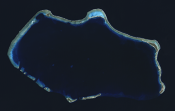
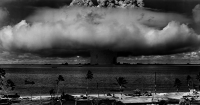
An underwater nuclear detonation lifted two million tons of seawater into the air, capsized battleships anchored a quarter mile from the blast, and contaminated the entire Bikini Atoll lagoon with radioactive fallout that made the test fleet too dangerous to touch. The Baker test, part of Operation Crossroads, was the fifth nuclear device the United States had ever detonated and the first designed to evaluate what an atomic bomb would do to a naval fleet from below the waterline. The United States military had assembled a target fleet of ninety-five vessels in the lagoon, including captured German and Japanese warships, decommissioned American battleships, and submarines, then stocked them with live animals to measure biological effects. The first test, Able, had been an aerial burst three weeks earlier that sank five ships but left most of the fleet afloat. Baker was expected to demonstrate more destructive power against hulls at the waterline. The bomb was suspended beneath a landing craft in the center of the target fleet and detonated at a depth of ninety feet. The resulting water column rose over a mile into the atmosphere, then collapsed back into the lagoon as a massive radioactive wave that washed over every ship in the anchorage. The aircraft carrier Saratoga, a veteran of multiple Pacific battles, sank within seven hours. The battleship Arkansas disappeared entirely, dragged to the bottom by the underwater shockwave. What stunned the observers was not the blast damage but the contamination. Radioactive water saturated every surface of every surviving ship. Sailors sent aboard to scrub decks and decontaminate the vessels absorbed dangerous radiation doses despite repeated washings. The planned third test, Charlie, was canceled after the Navy acknowledged it could not make the target fleet safe for human crews. Bikini's 167 residents, relocated before the tests with promises of return, have never permanently resettled their homeland.
July 25, 1946
80 years ago
Key Figures & Places
What Else Happened on July 25
Diocletian elevated his fellow soldier Maximian to the rank of Caesar, splitting the Roman Empire into eastern and western administrative halves. This pragmatic…
Roman legions in the rain-soaked garrison town of Eboracum acclaimed a young officer as emperor moments after his father drew his last breath, launching a polit…
The Senate built Constantine's victory arch by stealing from older monuments. Trajan's sculptures, Hadrian's medallions, Marcus Aurelius's panels—all pried loos…
The Slavs brought siege towers taller than the city's double walls. For three days in 677, they hurled themselves at Thessalonica's defenses—the Byzantine Empir…
Charles the Bald issued the Edict of Pistres, mandating the construction of fortified bridges across the Seine and other major rivers to block Viking longships …
Wang Geon seized the throne to establish the Goryeo Dynasty after his soldiers deposed the erratic King Gung Ye. This transition unified the Korean Peninsula un…
Talk to History
Have a conversation with historical figures who witnessed this era. Ask questions, explore perspectives, and bring history to life.