Machu Picchu Found: Lost Inca City Revealed
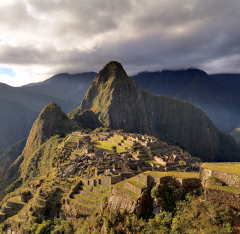
A local farmer charged fifty cents to guide the Yale lecturer up a steep jungle trail to a set of ruins that no Western academic knew existed. Hiram Bingham III reached the stone terraces of Machu Picchu on a foggy morning, scrambling through dense vegetation to find an elaborate complex of temples, plazas, and agricultural terraces perched on a narrow ridge between two Andean peaks at nearly eight thousand feet. Bingham was searching for Vilcabamba, the legendary last capital of the Inca resistance against Spanish conquest. He had organized a Yale expedition to Peru with funding from the university and the National Geographic Society, traveling by mule through the Urubamba Valley while interviewing local residents about ruins in the mountains. Melchor Arteaga, a farmer living near the Urubamba River, mentioned the site almost in passing, and Bingham initially had low expectations for what he would find. What he discovered was not Vilcabamba but something arguably more remarkable: a fifteenth-century royal estate built by the Inca emperor Pachacuti around 1450. The complex contained roughly two hundred structures, including a precisely carved temple of the sun, an astronomical observatory, and an elaborate system of fountains and channels that carried water from a natural spring through the entire settlement. The stonework was extraordinary, with blocks fitted so tightly that no mortar was needed and a knife blade could not be inserted between them. Machu Picchu had never been "lost" to local Quechua farmers, several of whom were actively cultivating its terraces when Bingham arrived. But it was unknown to the international archaeological community, and Bingham's photographs, published by National Geographic in 1913, introduced the site to the world. He returned twice with larger expeditions, removing thousands of artifacts that became the subject of a century-long repatriation dispute between Yale and Peru. Machu Picchu now draws more than a million visitors annually, making it both Peru's greatest cultural treasure and its most pressing conservation challenge.
July 24, 1911
115 years ago
Key Figures & Places
What Else Happened on July 24
The Ostrogoths abandoned the Siege of Ariminum when a Byzantine fleet appeared on the horizon far larger than expected, compelling their commander to withdraw r…
Ranulf II of Alife crushed the forces of Roger II of Sicily at the Battle of Nocera, halting the expansion of the Hauteville dynasty into the Italian mainland. …
Louis VII of France launched a desperate siege against Damascus, hoping to secure a Christian stronghold in the Levant. The campaign collapsed within four days …
King Edward I deployed the massive trebuchet known as War Wolf against Stirling Castle's defenders, hurling stones weighing hundreds of pounds that smashed thro…
Two thousand men died in a single afternoon over a title nobody outside Scotland cared about. Donald, Lord of the Isles, marched 10,000 Highlanders toward Aberd…
The monks chose a scholar who'd spent decades copying manuscripts in candlelight. Behnam Hadloyo took leadership of the Syriac Orthodox Church in Mardin in 1412…
Talk to History
Have a conversation with historical figures who witnessed this era. Ask questions, explore perspectives, and bring history to life.