
Tennessee Readmitted: First State Rejoins the Union
Tennessee became the first former Confederate state to rejoin the Union, clearing the way just fifteen months after Appomattox for a process of reconstruction that would consume the next decade and leave scars lasting far longer. Congress voted to restore Tennessee's representation after the state ratified the Fourteenth Amendment, becoming the only seceded state to avoid the military governance imposed on the other ten. Tennessee's path back was smoother than its neighbors' because of Andrew Johnson, a Tennessee Unionist who had served as military governor of the state before becoming Lincoln's vice president and then, after the assassination, president. Johnson's loyalist government in Nashville had maintained a functioning civil administration throughout the war, giving Tennessee institutional continuity that states under full Confederate control lacked. Governor William "Parson" Brownlow, a fiery Unionist preacher who had been imprisoned by the Confederacy, pushed ratification of the Fourteenth Amendment through the state legislature by questionable means, including arresting two opposing legislators to prevent them from leaving and denying a quorum. The amendment's core provisions guaranteed citizenship and equal protection under the law to all persons born in the United States, directly overturning the Dred Scott decision and establishing the constitutional basis for civil rights enforcement. The political compromise that readmitted Tennessee left the fundamental questions of Reconstruction unresolved. Freedmen technically gained citizenship but faced immediate efforts to restrict their movement, labor, and voting rights through Black Codes that mimicked slavery in all but name. The Ku Klux Klan, founded in Pulaski, Tennessee, just months earlier, was already terrorizing Black communities and white Republicans across the state. Tennessee's early readmission spared it from federal military oversight, which paradoxically may have left its Black citizens less protected than those in states where the army enforced civil rights directly.
July 24, 1866
160 years ago
Key Figures & Places
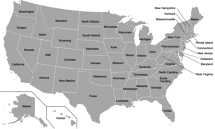
U.S. State
Wikipedia

Tennessee
Wikipedia
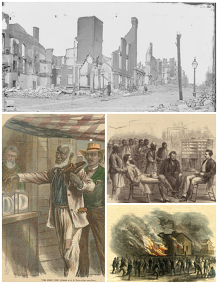
Reconstruction era of the United States
Wikipedia
Reconstruction
Wikipedia
Tennessee
Wikipedia
U.S. state
Wikipedia
Thirteenth Amendment to the United States Constitution
Wikipedia
Fourteenth Amendment to the United States Constitution
Wikipedia
Slavery in the United States
Wikipedia
American Civil War
Wikipedia
What Else Happened on July 24
The Ostrogoths abandoned the Siege of Ariminum when a Byzantine fleet appeared on the horizon far larger than expected, compelling their commander to withdraw r…
Ranulf II of Alife crushed the forces of Roger II of Sicily at the Battle of Nocera, halting the expansion of the Hauteville dynasty into the Italian mainland. …
Louis VII of France launched a desperate siege against Damascus, hoping to secure a Christian stronghold in the Levant. The campaign collapsed within four days …
King Edward I deployed the massive trebuchet known as War Wolf against Stirling Castle's defenders, hurling stones weighing hundreds of pounds that smashed thro…
Two thousand men died in a single afternoon over a title nobody outside Scotland cared about. Donald, Lord of the Isles, marched 10,000 Highlanders toward Aberd…
The monks chose a scholar who'd spent decades copying manuscripts in candlelight. Behnam Hadloyo took leadership of the Syriac Orthodox Church in Mardin in 1412…
Talk to History
Have a conversation with historical figures who witnessed this era. Ask questions, explore perspectives, and bring history to life.