

Leningrad Liberated: 900-Day Siege of Starvation Ends
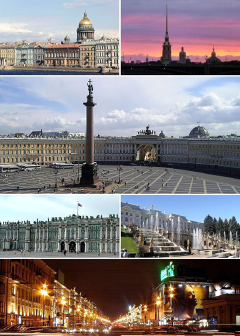
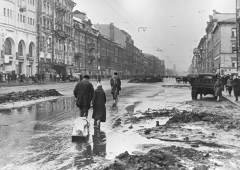
The siege lasted 872 days. Between September 1941 and January 1944, the German Wehrmacht encircled Leningrad and attempted to starve its population into submission. Approximately 800,000 civilians died, mostly from hunger, making the Siege of Leningrad the deadliest blockade in human history and one of the single greatest losses of civilian life in any event during World War II. Hitler had targeted Leningrad, the former St. Petersburg, for both strategic and ideological reasons. The city was the Soviet Union's second largest, a major industrial center, and home to the Baltic Fleet. It was also the birthplace of the Bolshevik Revolution, and its destruction held symbolic value for the Nazi regime. German forces, supported by Finnish troops approaching from the north, completed the encirclement on September 8, 1941, cutting all land routes into the city. The first winter was apocalyptic. With food supplies exhausted and no way to bring in provisions except across the frozen surface of Lake Ladoga, daily bread rations fell to 125 grams per person, roughly four slices. Residents ate wallpaper paste, boiled leather belts, and sawdust mixed with flour. Cannibalism was documented. The temperature dropped to minus 40 degrees. Bodies piled up in apartments and on streets because the living were too weak to bury them. An estimated 100,000 people died in January 1942 alone. The "Road of Life" across Lake Ladoga provided the city's only connection to the outside world. Trucks drove across the ice in winter, and barges crossed in summer, carrying food in and evacuating civilians out. The route was under constant German artillery fire and air attack, and countless vehicles broke through the ice and sank. Despite the losses, the supply line prevented the city's complete starvation and allowed the evacuation of approximately 1.5 million civilians over the course of the siege. Soviet forces launched Operation Iskra in January 1943, breaking through the German blockade south of Lake Ladoga and opening a narrow land corridor to the city. The full liberation came on January 27, 1944, when a massive Soviet offensive drove the Germans back along the entire Leningrad front. The siege was officially over. Leningrad's refusal to surrender became central to Soviet national identity and remains a defining chapter of Russian memory of the war. The cost of that defiance was borne almost entirely by civilians.
January 18, 1944
82 years ago
Key Figures & Places
What Else Happened on January 18
Roman aristocrats in Gaul proclaimed General Magnentius emperor, directly challenging the unpopular rule of Constans. This usurpation triggered a brutal civil w…
General Magnentius seized power in the western Roman Empire on January 18, 350, overthrowing and eventually killing Emperor Constans in a coup that reflected th…
A seven-year-old emperor? Barely old enough to read, yet wearing imperial purple. Leo II inherited the Byzantine throne through pure bloodline, but his moment o…
The Byzantine emperor's back was against the wall. Justinian I faced total overthrow as chariot racing fans—divided into rival "Blue" and "Green" fan factions—s…
Emperor Huizong abdicated the Song Dynasty throne to his son, Qinzong, in a desperate attempt to shift responsibility for the encroaching Jurchen Jin army. This…
A wedding to end a war. Elizabeth wore white silk—rare then—and the court held its breath. This wasn't just a marriage; it was a human truce that would close th…
Talk to History
Have a conversation with historical figures who witnessed this era. Ask questions, explore perspectives, and bring history to life.