

Versailles Opens: The Peace Conference That Failed
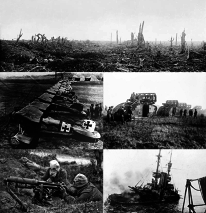
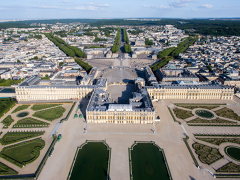
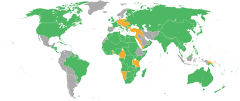
Seventy delegations representing twenty-seven nations gathered at the French Foreign Ministry on the Quai d'Orsay in Paris on January 18, 1919, to redraw the map of the world after the most destructive war in human history. The Paris Peace Conference would produce five treaties, create new nations, dissolve empires, and establish the League of Nations. Nearly every decision it made would be contested, and several would contribute directly to the next world war. The conference was dominated by the "Big Four": U.S. President Woodrow Wilson, British Prime Minister David Lloyd George, French Premier Georges Clemenceau, and Italian Prime Minister Vittorio Orlando. Wilson arrived in Paris as the most popular figure in Europe, his Fourteen Points having inspired hope for a just and lasting peace. Clemenceau, whose country had suffered 1.4 million military dead and whose northern provinces had been devastated by four years of trench warfare, wanted security above all else. Lloyd George sought to balance punishing Germany with preserving European stability. Orlando cared primarily about Italy's territorial claims. The negotiations consumed six months and produced the Treaty of Versailles, signed on June 28, 1919. Germany was forced to accept sole responsibility for the war under the "war guilt" clause, pay reparations initially set at 132 billion gold marks, cede territory to France, Belgium, Poland, and Denmark, and accept severe limitations on its military. The Rhineland was demilitarized. The Saar coal mines were given to France. Germany's overseas colonies were redistributed as League of Nations mandates. The treaty's terms satisfied no one completely. Clemenceau thought they were too lenient. Wilson's League of Nations, his greatest achievement at the conference, was rejected by the U.S. Senate, leaving the new international body without its most powerful proposed member. The mandates that distributed Ottoman and German colonial territory to Britain, France, and Japan planted seeds of conflict across the Middle East, Africa, and the Pacific. German resentment of the treaty became the most potent political force in Weimar Germany, exploited ruthlessly by Adolf Hitler and the Nazi Party. The peace that was supposed to end all wars created the conditions for an even greater one, twenty years later.
January 18, 1919
107 years ago
Key Figures & Places

France
Wikipedia
World War I
Wikipedia
Palace of Versailles
Wikipedia
Paris Peace Conference, 1919
Wikipedia
Versailles
Wikipedia

World War I
Wikipedia

Paris Peace Conference (1919–1920)
Wikipedia

Palace of Versailles
Wikipedia

Wilhelm I
Wikipedia

proclaimed
Wikipedia

Hall of Mirrors
Wikipedia
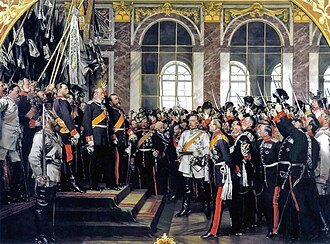
Franco-Prussian War
Wikipedia

German Emperor
Wikipedia

Constitution of the German Confederation (1871)
Wikipedia

Otto von Bismarck
Wikipedia

Prussia
Wikipedia

Kaiser
Wikipedia

Frederick I of Prussia
Wikipedia

German Empire
Wikipedia

Liste des monarques de Prusse
Wikipedia

Versailles, Yvelines
Wikipedia

Histoire de Berlin
Wikipedia

Alt-Kölln
Wikipedia

Berlin-Friedrichswerder
Wikipedia
Dorotheenstadt
Wikipedia
Friedrichstadt (Berlin)
Wikipedia

Brandenburg–Prussia
Wikipedia

Selbstkrönung
Wikipedia

Königsberg
Wikipedia
Kingdom of Prussia
Wikipedia

Königskrönung Friedrichs III. von Brandenburg
Wikipedia
Königsberger Schloss
Wikipedia

France
Wikipedia
What Else Happened on January 18
Roman aristocrats in Gaul proclaimed General Magnentius emperor, directly challenging the unpopular rule of Constans. This usurpation triggered a brutal civil w…
General Magnentius seized power in the western Roman Empire on January 18, 350, overthrowing and eventually killing Emperor Constans in a coup that reflected th…
A seven-year-old emperor? Barely old enough to read, yet wearing imperial purple. Leo II inherited the Byzantine throne through pure bloodline, but his moment o…
The Byzantine emperor's back was against the wall. Justinian I faced total overthrow as chariot racing fans—divided into rival "Blue" and "Green" fan factions—s…
Emperor Huizong abdicated the Song Dynasty throne to his son, Qinzong, in a desperate attempt to shift responsibility for the encroaching Jurchen Jin army. This…
A wedding to end a war. Elizabeth wore white silk—rare then—and the court held its breath. This wasn't just a marriage; it was a human truce that would close th…
Talk to History
Have a conversation with historical figures who witnessed this era. Ask questions, explore perspectives, and bring history to life.