First Fleet Arrives: European Settlement in Australia
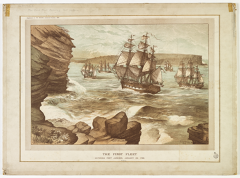
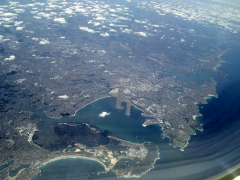
Eleven ships carrying more than 1,000 people, roughly 750 of them convicts, dropped anchor at Botany Bay on January 18, 1788, after an eight-month voyage from Portsmouth, England. The First Fleet's arrival marked the beginning of European settlement in Australia and the start of a dispossession of Aboriginal peoples whose consequences continue to reverberate. The fleet existed because of the American Revolution. For decades, Britain had transported convicted criminals to its North American colonies, offloading roughly 50,000 prisoners between 1718 and 1775. When the United States won independence and refused to accept further convicts, Britain's overcrowded prisons became a crisis. Prison hulks, decommissioned ships moored in the Thames and other harbors, housed thousands of inmates in squalid conditions. The government needed a new dumping ground, and the remote continent that James Cook had charted in 1770 offered a solution 12,000 miles from London. Captain Arthur Phillip commanded the fleet and would serve as the first governor of New South Wales. He quickly determined that Botany Bay itself was unsuitable for settlement, lacking fresh water and adequate anchorage. On January 26, he moved the fleet north to Port Jackson, where he found one of the finest natural harbors in the world. The settlement was established at Sydney Cove. The convicts transported on the First Fleet had been sentenced for offenses ranging from theft and forgery to assault. Many were petty criminals from London's poorest neighborhoods. The youngest was a boy of nine. The oldest were in their sixties. Women made up roughly a quarter of the convict population. The marines who guarded them were only slightly better off, many having been pressured into service with promises of land grants that were slow to materialize. For the Aboriginal people who had inhabited the continent for more than 65,000 years, the arrival of the First Fleet began a process of dispossession, disease, and violence that would devastate their populations and cultures. Smallpox swept through Aboriginal communities around Sydney within eighteen months of settlement, killing an estimated half the indigenous population of the region. The colony that began as a dumping ground for petty criminals grew into a nation. Australia Day is still observed on January 26, the date Phillip raised the flag at Sydney Cove, though the holiday remains deeply contested by Aboriginal Australians who call it Invasion Day.
January 18, 1788
238 years ago
Key Figures & Places

What Else Happened on January 18
Roman aristocrats in Gaul proclaimed General Magnentius emperor, directly challenging the unpopular rule of Constans. This usurpation triggered a brutal civil w…
General Magnentius seized power in the western Roman Empire on January 18, 350, overthrowing and eventually killing Emperor Constans in a coup that reflected th…
A seven-year-old emperor? Barely old enough to read, yet wearing imperial purple. Leo II inherited the Byzantine throne through pure bloodline, but his moment o…
The Byzantine emperor's back was against the wall. Justinian I faced total overthrow as chariot racing fans—divided into rival "Blue" and "Green" fan factions—s…
Emperor Huizong abdicated the Song Dynasty throne to his son, Qinzong, in a desperate attempt to shift responsibility for the encroaching Jurchen Jin army. This…
A wedding to end a war. Elizabeth wore white silk—rare then—and the court held its breath. This wasn't just a marriage; it was a human truce that would close th…
Talk to History
Have a conversation with historical figures who witnessed this era. Ask questions, explore perspectives, and bring history to life.