Apollo 11 Launches: Moon Landing Mission Begins
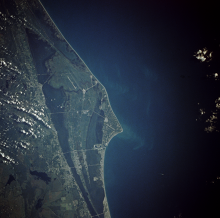
Three astronauts rode a pillar of flame into the Florida sky at 9:32 a.m. on July 16, 1969, carrying the expectations of a nation that had spent eight years and $25.4 billion preparing for this moment. Apollo 11 launched from Pad 39A at Kennedy Space Center, powered by the Saturn V rocket's 7.5 million pounds of thrust, on a trajectory that would place Neil Armstrong and Buzz Aldrin on the lunar surface four days later while Michael Collins orbited alone above them. The mission was the culmination of President John F. Kennedy's 1961 challenge to land a man on the Moon and return him safely before the decade's end. NASA had methodically worked through the Mercury, Gemini, and early Apollo programs, testing every component of the lunar landing in sequence. Apollo 8 orbited the Moon in December 1968. Apollo 9 tested the lunar module in Earth orbit. Apollo 10 descended to within nine miles of the Moon's surface in a full dress rehearsal. By July 1969, only the landing itself remained. An estimated one million spectators lined the beaches and causeways around Cape Canaveral to watch the launch. Among the VIP guests were former President Lyndon Johnson, who had championed the space program as Senate majority leader and president, and thousands of members of Congress, foreign diplomats, and journalists. Walter Cronkite narrated the countdown for CBS, and his voice cracked with emotion as the rocket cleared the tower. The Saturn V's five F-1 engines consumed fifteen tons of kerosene and liquid oxygen per second during the first-stage burn. Armstrong, the mission commander, was a thirty-eight-year-old civilian test pilot and Korean War veteran who had nearly been killed twice during his flying career, once when his X-15 bounced off the atmosphere and once when his Gemini 8 spacecraft tumbled out of control. Aldrin, the lunar module pilot, held a doctorate in orbital mechanics from MIT. Collins, the command module pilot, would spend twenty-one hours alone in lunar orbit while his crewmates explored the surface below, later calling himself "not the loneliest man since Adam, but the most aware of his isolation." Four days of transit lay ahead before the landing that would redefine humanity's relationship with the cosmos.
July 16, 1969
57 years ago
Key Figures & Places
What Else Happened on July 16
Muhammad left Mecca with a handful of followers in September 622, walking 280 miles north to Medina to escape assassination. The journey itself wasn't remarkabl…
Tsar Samuel's Bulgarian forces crumble against Nikephoros Ouranos's Byzantine army at the Spercheios River, ending his decade-long campaign to reclaim Macedonia…
The papal bull wasn't even valid—Pope Leo IX had died three months earlier. But Cardinal Humbert didn't know that when he marched into Hagia Sophia on July 16, …
Alfonso VIII watched 60,000 Christian knights gather at Toledo—the largest crusader army ever assembled on Iberian soil. On July 16, 1212, they met Muhammad al-…
Two years. That's how long the Catholic Church waited after Giovanni di Pietro di Bernardone died before declaring him a saint—the fastest canonization in medie…
Arjona's declaration of independence thrust Muhammad ibn Yusuf into leadership as a local ruler in southern Spain, launching a political career that would event…
Talk to History
Have a conversation with historical figures who witnessed this era. Ask questions, explore perspectives, and bring history to life.