Crusaders Seize Jerusalem: Holy City Falls in 1099
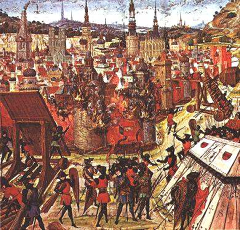
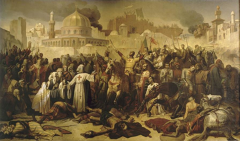
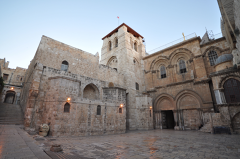
Three years of marching, starvation, plague, and slaughter across two continents ended on the walls of Jerusalem on July 15, 1099, when Crusader soldiers poured through a breach and massacred the city's Muslim and Jewish inhabitants in one of the medieval world's most notorious bloodbaths. The First Crusade achieved its stated objective of liberating the Holy City from Islamic control, but the cost in human life, on both sides, permanently scarred relations between Christendom and the Islamic world. The Crusade began in November 1095 when Pope Urban II called on Christian knights to rescue the Holy Land from the Seljuk Turks. An estimated 60,000 to 100,000 people departed from various points in Europe, including armed knights, infantry, clergy, and noncombatants. By the time the survivors reached Jerusalem's walls in June 1099, disease, combat, starvation, and desertion had reduced the fighting force to roughly 12,000 infantry and 1,500 knights. They faced a Fatimid Egyptian garrison of about 1,000 defenders behind walls that the Crusaders lacked the equipment to breach. A Genoese fleet arriving at Jaffa on June 17 provided the timber and skilled craftsmen needed to build siege towers and scaling ladders. On July 14, Godfrey of Bouillon's forces attacked the northern wall while Raymond of Toulouse assaulted the southern gate. Godfrey's siege tower reached the walls on the morning of July 15, and his men fought their way onto the ramparts. Once inside, Crusader discipline collapsed entirely. Knights and foot soldiers swept through the streets killing indiscriminately. Muslim civilians who fled to the al-Aqsa Mosque were slaughtered. Jewish residents who sheltered in the Great Synagogue were burned alive when the building was set ablaze. Contemporary accounts, both Christian and Muslim, describe the streets running with blood. Estimates of the dead range from several thousand to tens of thousands. The Crusaders established the Kingdom of Jerusalem under Godfrey of Bouillon, who took the title Defender of the Holy Sepulchre rather than King, saying he would not wear a crown of gold where Christ wore a crown of thorns. The kingdom survived for eighty-eight years until Saladin recaptured the city in 1187, and the memory of the 1099 massacre fueled Islamic resistance to Crusader presence throughout that period.
July 15, 1099
927 years ago
Key Figures & Places
What Else Happened on July 15
Rome dedicated the Temple of Castor and Pollux in the Forum to honor the divine twins who allegedly helped the Republic secure victory at the Battle of Lake Reg…
Titus and his Roman legions smashed through Jerusalem's breached walls, ending the city's desperate defense and sealing the fate of the Second Temple. This brut…
The Imperial Guards wouldn't march another step until she died. Yang Guifei, Emperor Xuanzong's beloved consort, was strangled by his chief eunuch on July 15, 7…
The Crusaders built their church directly over what they believed was Christ's tomb—while still fighting for control of the streets outside. Fifty years after c…
King John expelled the monks of Canterbury Cathedral after they backed Stephen Langton’s appointment as Archbishop against the King’s wishes. This confrontation…
Alexander Nevsky led a Novgorodian army to a swift victory over Swedish invaders at the confluence of the Izhora and Neva rivers, earning the surname that would…
Talk to History
Have a conversation with historical figures who witnessed this era. Ask questions, explore perspectives, and bring history to life.