Battle of Britain Begins: Luftwaffe Attacks Channel
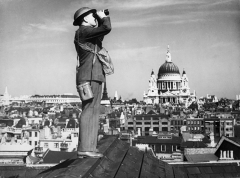
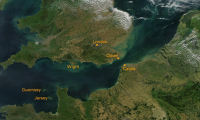
Luftwaffe bombers screamed over the English Channel on July 10, 1940, targeting British shipping convoys in what became the opening salvo of the largest sustained aerial campaign in history. The Battle of Britain had begun, and the fate of Western civilization hung on the outcome. Nazi Germany had conquered France in six weeks and now controlled the entire European coastline from Norway to Spain. Adolf Hitler needed air superiority over the Channel before launching Operation Sea Lion, his planned amphibious invasion of Britain. Hermann Goering assured the Fuehrer that his Luftwaffe, with nearly 2,600 aircraft, could crush the Royal Air Force and its roughly 700 operational fighters within weeks. The initial phase focused on Channel convoys and coastal ports, drawing RAF Fighter Command into engagements over water where downed British pilots could not be recovered. Radar stations along the English coast, part of the Chain Home network, gave defenders crucial early warning of incoming raids. Air Chief Marshal Hugh Dowding carefully husbanded his forces, refusing to commit entire squadrons to convoy defense despite political pressure. Through July and into August, the Luftwaffe escalated from convoy attacks to targeting airfields and aircraft factories. The young pilots of Fighter Command, averaging just twenty hours of combat training, flew multiple sorties daily. Their Spitfires and Hurricanes proved devastatingly effective, though losses mounted on both sides. By mid-September, after failing to destroy the RAF, Hitler postponed Sea Lion indefinitely and shifted to nighttime terror bombing of London and other cities. Britain survived as the sole Western power opposing Nazi Germany, preserving the island base from which the eventual liberation of Europe would be launched. Churchill captured it best: "Never in the field of human conflict was so much owed by so many to so few."
July 10, 1940
86 years ago
Key Figures & Places

What Else Happened on July 10
Julius Caesar narrowly escaped total annihilation at Dyrrhachium after Pompey’s forces breached his lines, forcing a desperate retreat into Thessaly. This tacti…
He'd spent three years trying to die. Hadrian, Rome's wall-building emperor, suffered heart failure at his seaside villa in Baiae on July 10, 138 AD—but only af…
Liu Yu seized the throne from Emperor Gong of Jin to establish the Liu Song dynasty in 420 AD, ending the Eastern Jin era through a carefully orchestrated trans…
Prince Naka-no-Ōe watched Soga no Iruka read tribute reports from Korea for twelve minutes before drawing his sword. The date was June 14, 645. Iruka controlled…
A Viking warlord knelt to an Irish king and founded a city by accident. Glun Iarainn—"Iron Knee"—ruled Dublin's Norse settlement when Máel Sechnaill II's armies…
The fire started in Southwark, jumped the Thames, and trapped Londoners on London Bridge itself—packed with timber houses on both sides. Three thousand people d…
Talk to History
Have a conversation with historical figures who witnessed this era. Ask questions, explore perspectives, and bring history to life.