Liberty Bell Rings: Declaration Read to the People
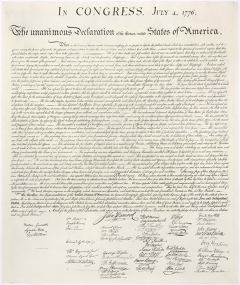
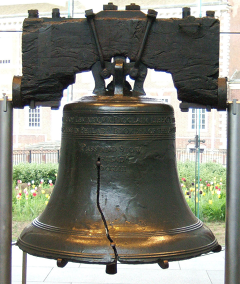
The bell in the tower of the Pennsylvania State House rang out over Philadelphia as Colonel John Nixon read the Declaration of Independence aloud to a gathered crowd on July 8, 1776. Four days after Congress adopted the document, the public heard its words for the first time. The crowd cheered, bonfires were lit, and soldiers tore down the king s coat of arms from public buildings. The bell that rang that day would not be called the Liberty Bell for another sixty years. The reading was the first of many across the thirteen colonies as riders carried printed copies of the declaration to every state capital, military camp, and major town. Each reading was a public performance of revolution — the moment abstract congressional debate became a shared commitment to independence. In New York City, a crowd listening to the reading on July 9 marched to Bowling Green and toppled the gilded lead statue of King George III. The statue was melted down and cast into roughly 42,000 musket balls for the Continental Army. The bell itself had been cast in London in 1752 and shipped to Philadelphia for the new State House. It cracked during testing and was recast twice by local metalworkers John Pass and John Stow, whose names are inscribed on the bell alongside the biblical inscription "Proclaim LIBERTY throughout all the Land unto all the Inhabitants thereof." The inscription was chosen for the fiftieth anniversary of William Penn s 1701 Charter of Privileges, not for the Revolution, but its words proved prophetic. The bell developed its famous crack sometime in the early nineteenth century, likely during routine use for municipal announcements and celebrations. The exact date is disputed — accounts range from 1824 to 1846. By the 1830s, abolitionists had adopted the bell as a symbol of freedom, giving it the name Liberty Bell in an 1835 pamphlet. The cracked bell became more powerful as a symbol than it had ever been as a functioning instrument. The Liberty Bell traveled extensively in the late nineteenth and early twentieth centuries, displayed at world s fairs and expositions across the country. Philadelphia permanently retired it from travel in 1915 after each trip seemed to worsen the crack. Today it sits in its own pavilion near Independence Hall, visited by over two million people annually.
July 8, 1776
250 years ago
Key Figures & Places
What Else Happened on July 8
Fifteen thousand starving Crusader soldiers marched barefoot around Jerusalem's walls in a religious procession while Muslim defenders watched from the ramparts…
The Byzantine army slaughtered 15,000 Hungarian soldiers at Sirmium in a single afternoon. Manuel I Komnenos had lured King Stephen III's forces into the marshl…
Roger of Lauria's galleys trapped the Angevin relief fleet in Malta's Grand Harbor before a single soldier could disembark. June 8, 1283. The Provençal commande…
Four ships. That's what Vasco da Gama commanded when he left Lisbon on July 8, 1497, chasing a sea route to India's spice markets. His crew of 170 men faced ten…
A young girl unearthed the icon of Our Lady of Kazan from the ashes of a devastating fire, and the image quickly became the most venerated in the Russian Orthod…
Charles II granted a royal charter to Rhode Island, formally establishing the colony as a haven for religious dissenters. By guaranteeing freedom of conscience,…
Talk to History
Have a conversation with historical figures who witnessed this era. Ask questions, explore perspectives, and bring history to life.