Salvation Army Founded: Aid for London's Poorest
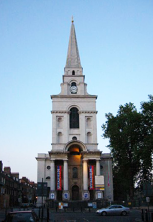
William Booth was a Methodist preacher who refused to save souls while ignoring empty stomachs. In July 1865, he and his wife Catherine established the East London Christian Mission in Whitechapel, one of the most destitute neighborhoods in Victorian England. The organization would eventually become the Salvation Army, one of the largest charitable organizations on earth, but it started with a tent, a handful of volunteers, and the radical conviction that spiritual salvation and material relief were inseparable. Booth had broken with the Methodist establishment because they wanted him to stay in a fixed parish. He insisted on street preaching in the slums where poverty, alcoholism, and disease were concentrated. Whitechapel in the 1860s was a place where families of eight lived in single rooms, children worked fourteen-hour days in factories, and gin was cheaper than clean water. The established churches had largely abandoned the area. Catherine Booth was an equal partner in every meaningful sense. She preached as frequently and effectively as her husband, at a time when women in pulpits was considered scandalous. She developed the organization s theology and insisted on gender equality within its ranks, establishing a principle that the Salvation Army maintained — women officers have served in leadership roles from the beginning. The mission renamed itself the Salvation Army in 1878, adopting military terminology, uniforms, ranks, and brass bands. The military structure served a practical purpose: it created clear chains of command for an organization expanding rapidly across Britain and then internationally. The brass bands drew crowds in neighborhoods where conventional church services attracted no one. Critics mocked the uniforms and music. Booth did not care — the methods worked. By the time William Booth died in 1912, the Salvation Army operated in 58 countries. The organization had pioneered social services that governments later adopted as standard: homeless shelters, disaster relief, addiction recovery programs, and missing persons bureaus. Today the Salvation Army operates in 134 countries and raises billions annually, making it one of the world s largest non-governmental providers of social services.
July 5, 1865
161 years ago
Key Figures & Places
What Else Happened on July 5
Theophilus Patricius engineered a bridge across the Danube's 1,400-meter width using twenty stone piers sunk into one of Europe's fastest currents. The architec…
King John Balliol and Philip IV of France formalized the Auld Alliance, committing both nations to military support against Edward I of England. This mutual def…
Louis of Burgundy and Ferdinand of Majorca clashed at the Battle of Manolada, fighting for control of the Principality of Achaea. Ferdinand died in the skirmish…
Pope Gregory XIII gave the Maronites their own college in Rome, but he died before signing the papers. His successor, Sixtus V, finished the job in 1584. The sc…
Pedro Lopes de Sousa marched 20,000 Portuguese and Lascarin troops into Kandy's interior in October 1594, convinced the mountain kingdom would fall within days.…
John Guy departed Bristol with 39 colonists to establish the first permanent English settlement in Newfoundland at Cupids. This expedition transitioned England’…
Talk to History
Have a conversation with historical figures who witnessed this era. Ask questions, explore perspectives, and bring history to life.