Queen Overthrown: Hawaii Seized by American Planters
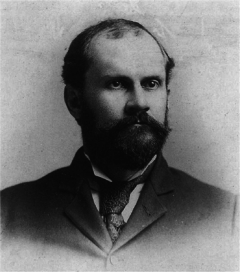
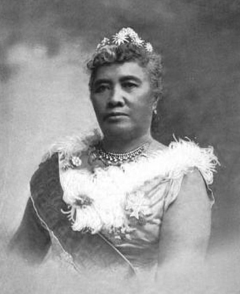
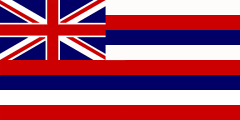
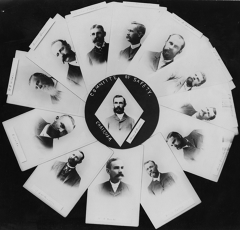
Queen Liliuokalani of Hawaii was preparing to promulgate a new constitution that would restore the power of the monarchy when a group of American and European businessmen, backed by 162 United States Marines, overthrew her government on January 17, 1893. The coup was led by Lorrin Thurston, a lawyer and grandson of American missionaries, and it ended a sovereign kingdom that had existed for more than a century. The roots of the overthrow reached back decades. American sugar planters had established enormous plantations across the Hawaiian Islands, importing labor from China, Japan, and Portugal to work the fields. The 1887 "Bayonet Constitution," forced on King Kalakaua at gunpoint, had stripped the monarchy of most governing authority and restricted voting rights to wealthy property owners, effectively disenfranchising most Native Hawaiians while empowering the planter elite. Liliuokalani ascended the throne in 1891 after her brother's death and immediately moved to undo the Bayonet Constitution. She drafted a new governing document that would restore royal authority and expand voting rights to all Hawaiian citizens. The business community, which had profited enormously from the existing arrangement and wanted formal annexation by the United States to secure favorable sugar tariffs, saw her plan as an existential threat. Thurston's Committee of Safety, composed of thirteen men, mostly American-born, announced the overthrow on January 17 and declared a provisional government. John L. Stevens, the U.S. Minister to Hawaii, had ordered Marines from the USS Boston to come ashore the previous day, ostensibly to protect American lives and property. The queen recognized that resistance against armed troops would result in bloodshed and yielded her authority under protest, stating she was surrendering to "the superior force of the United States of America." President Grover Cleveland investigated the overthrow, and his appointed commissioner, James Blount, concluded it had been illegal and that the American minister had conspired with the plotters. Cleveland attempted to restore the queen but lacked congressional support. The provisional government refused to step down and declared the Republic of Hawaii in 1894. Annexation by the United States followed in 1898 during the Spanish-American War, when Hawaii's strategic location in the Pacific became too valuable to leave independent. Congress formally apologized for the overthrow in 1993, exactly one hundred years later, acknowledging that the Native Hawaiian people had never relinquished their sovereignty.
January 17, 1893
133 years ago
Key Figures & Places
What Else Happened on January 17
Political theater with a brutal twist. Octavian dumps Scribonia literally moments after she gives birth to their daughter, walking out of the delivery room to i…
A dying emperor's last breath split an entire civilization in two. Theodosius I — the last ruler to command a unified Roman Empire — collapsed in Milan, leaving…
The Balearic Islands never saw him coming. Alfonso III's fleet—60 ships strong—swept across Mediterranean waters with a ruthless precision that would make medie…
A biblical-scale disaster struck without warning. Massive storm surges crushed coastal towns in Holland and Friesland, drowning entire communities in what would…
The Pope was done with French wine and French politics. After seven decades of papal exile in Avignon, Gregory XI packed up the entire Catholic bureaucracy and …
An Italian explorer sailing for the French king, Verrazzano was about to map something nobody had seen: the entire Atlantic seaboard of North America. His tiny …
Talk to History
Have a conversation with historical figures who witnessed this era. Ask questions, explore perspectives, and bring history to life.