Lewis Carroll Tells Alice: Wonderland Is Born
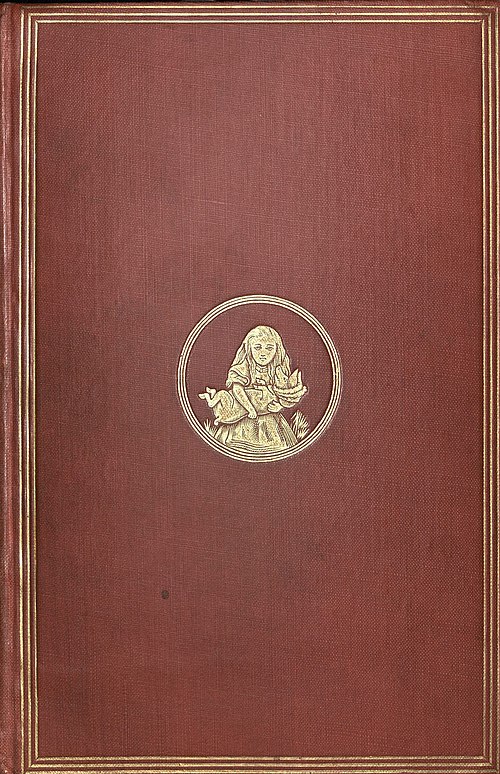
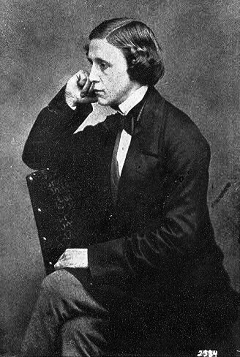
Charles Lutwidge Dodgson improvised a story about a girl falling down a rabbit hole during a boat trip on the Thames on July 4, 1862, and ten-year-old Alice Liddell liked it so much she asked him to write it down. That improvisation became Alice s Adventures in Wonderland, one of the most influential works of English literature, though Dodgson — a mathematics lecturer at Christ Church, Oxford — could not have known it at the time. Dodgson rowed up the Thames from Oxford to Godstow with his friend Robinson Duckworth and the three Liddell sisters: Lorina, Alice, and Edith, daughters of Henry Liddell, the Dean of Christ Church. The afternoon was warm, and Alice requested a story. Dodgson began telling a tale of a girl named Alice who followed a white rabbit underground into a world where logic operated by different rules. Duckworth later recalled that the story seemed to invent itself as Dodgson spoke. Alice Liddell pestered Dodgson repeatedly to write the story down. He spent months creating a handwritten manuscript called Alice s Adventures Under Ground, illustrated with his own drawings, which he presented to Alice as a Christmas gift in 1864. Friends who read the manuscript urged him to publish it. Dodgson expanded the text, hired illustrator John Tenniel, and published under the pen name Lewis Carroll in 1865. The book broke every convention of Victorian children s literature. There was no moral lesson, no punishment for bad behavior, no religious instruction. Instead, Dodgson filled Wonderland with logical paradoxes, linguistic puzzles, and satirical encounters that delighted children and fascinated adults. The Mad Hatter s tea party, the Cheshire Cat, and the Queen of Hearts became permanent fixtures of English-speaking culture. Through the Looking-Glass followed in 1871, extending the Wonderland universe with chess-based structure and even more elaborate wordplay. Together, the Alice books have been translated into over 170 languages, adapted into countless films and stage productions, and influenced writers from James Joyce to Jorge Luis Borges. The mathematics lecturer s improvised boat trip story became immortal.
July 4, 1862
164 years ago
Key Figures & Places
What Else Happened on July 4
Epaminondas led the Thebans to a decisive victory over the Spartans at the Battle of Mantinea, though he died in the final charge. His tactical brilliance shatt…
A thirteen-year-old emperor signed away his throne to his fifteen-year-old sister. Aelia Pulcheria didn't wait for permission—she proclaimed herself Augusta in …
The peace lasted exactly ten years—unusual for medieval Italy, where treaties typically collapsed within months. Prince Sicard of Benevento and Duke Andrew II o…
The pope needed witnesses. Actual people who'd seen miracles. So when John XV canonized Ulrich of Augsburg on January 31, 993, he required testimony—sworn state…
Chinese court astronomers recorded a "guest star" so brilliant it cast visible shadows at night and could be seen in broad daylight for twenty-three consecutive…
The infant prince died, and his uncle Jordan II took the throne of Capua within days. No debate. No ceremony worth recording. Just a smooth transfer of power in…
Talk to History
Have a conversation with historical figures who witnessed this era. Ask questions, explore perspectives, and bring history to life.