

Independence Declared: The United States Is Born
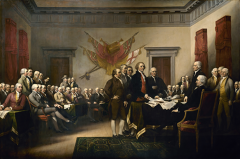
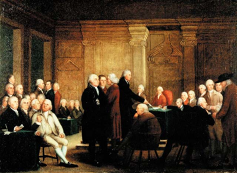
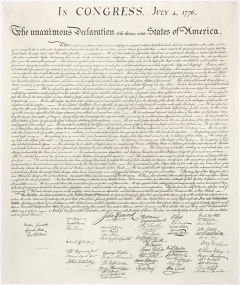
Fifty-six men signed a document that marked them for hanging. The Declaration of Independence, adopted by the Second Continental Congress on July 4, 1776, announced to Britain and the world that thirteen colonies considered themselves free and sovereign states. The actual vote for independence had occurred two days earlier, on July 2 — John Adams predicted that date would be celebrated for centuries — but July 4 became the icon because that was when the final text was approved. Thomas Jefferson drafted the declaration in seventeen days, working from a portable writing desk in a rented room on Market Street in Philadelphia. He was 33 years old, chosen for the task because of his reputation as an elegant writer. Benjamin Franklin and John Adams served on the drafting committee and made revisions, though Jefferson resented their edits for the rest of his life. Congress made more substantial changes. Jefferson s original draft included a passage condemning the slave trade as a moral abomination, blaming King George III for forcing slavery on the colonies. South Carolina and Georgia demanded its removal, and northern delegates who profited from the slave trade agreed. The excision left a contradiction at the heart of the new nation that would take a civil war to resolve. The declaration s philosophical framework drew heavily from John Locke and the Enlightenment tradition of natural rights. "We hold these truths to be self-evident, that all men are created equal" — the most famous sentence in American political writing — established a standard the nation would spend centuries trying to live up to. At the time, "all men" effectively meant white male property owners, but the language proved more powerful than its authors intended. The document was not widely signed on July 4. Most delegates signed on August 2, and some not until later. The signed parchment copy was hidden in various locations during the Revolutionary War, transported by horse and wagon to keep it from British capture. The men who affixed their names understood they were committing treason against the Crown, punishable by death — Franklin reportedly quipped that they must all hang together, or they would most assuredly hang separately.
July 4, 1776
250 years ago
Key Figures & Places
What Else Happened on July 4
Epaminondas led the Thebans to a decisive victory over the Spartans at the Battle of Mantinea, though he died in the final charge. His tactical brilliance shatt…
A thirteen-year-old emperor signed away his throne to his fifteen-year-old sister. Aelia Pulcheria didn't wait for permission—she proclaimed herself Augusta in …
The peace lasted exactly ten years—unusual for medieval Italy, where treaties typically collapsed within months. Prince Sicard of Benevento and Duke Andrew II o…
The pope needed witnesses. Actual people who'd seen miracles. So when John XV canonized Ulrich of Augsburg on January 31, 993, he required testimony—sworn state…

Chinese court astronomers recorded a "guest star" so brilliant it cast visible shadows at night and could be seen in broad daylight for twenty-three consecutive…
The infant prince died, and his uncle Jordan II took the throne of Capua within days. No debate. No ceremony worth recording. Just a smooth transfer of power in…
Talk to History
Have a conversation with historical figures who witnessed this era. Ask questions, explore perspectives, and bring history to life.