

Johnson Signs Civil Rights Act: Segregation Outlawed
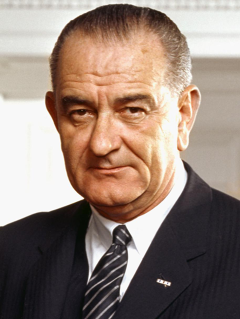
Lyndon Johnson used 75 ceremonial pens to sign the Civil Rights Act of 1964, handing one to Martin Luther King Jr., who stood directly behind him in the East Room of the White House. The law outlawed segregation in public accommodations, banned employment discrimination based on race, color, religion, sex, or national origin, and became the most sweeping civil rights legislation since Reconstruction. The bill had been John F. Kennedy s initiative, introduced in June 1963 after televised images of Birmingham police attacking peaceful demonstrators with dogs and fire hoses shocked the nation. Kennedy s assassination in November 1963 transformed the legislation from a political battle into a moral imperative. Johnson, a Texan with an encyclopedic knowledge of Senate procedure, made passage his first domestic priority. The most formidable obstacle was a 54-day filibuster in the Senate, the longest in American history. Southern Democrats led by Richard Russell of Georgia held the floor continuously, attempting to talk the bill to death. Johnson needed a two-thirds majority to invoke cloture and end debate. Republican Minority Leader Everett Dirksen of Illinois delivered the critical votes, declaring on the Senate floor that civil rights was an idea whose time had come. The act s reach extended far beyond lunch counters and bus stations. Title VII created the Equal Employment Opportunity Commission, establishing federal enforcement of workplace discrimination law. Title VI threatened to cut federal funding to any institution practicing discrimination, giving the government leverage over schools, hospitals, and universities that accepted public money. Johnson reportedly told an aide after the signing that the Democratic Party had lost the South for a generation. The political realignment he predicted proved deeper and longer-lasting than even he imagined.
July 2, 1964
62 years ago
Key Figures & Places
President of the United States
Wikipedia
Lyndon B. Johnson
Wikipedia
Civil Rights Act of 1964
Wikipedia

Civil rights movement
Wikipedia

Lyndon B. Johnson
Wikipedia

Civil Rights Act of 1964
Wikipedia

Washington, D.C.
Wikipedia
Racismo en Estados Unidos
Wikipedia

South Carolina
Wikipedia

United States Congress
Wikipedia

Jim Crow
Wikipedia
President
Wikipedia

Benjamin Harrison
Wikipedia

United States Senate
Wikipedia
Sherman Antitrust Act
Wikipedia
Monopoly
Wikipedia
Bürgerrechtsbewegungen
Wikipedia
What Else Happened on July 2
Valentinian III turned eighteen in 437, old enough to rule the Western Roman Empire alone. His mother Galla Placidia officially stepped back from her fifteen-ye…
Two brothers died in an ambush at the palace's north gate, arrows finding their marks before they could draw swords. Li Shimin killed them himself on July 2, 62…
Six bodies, three generations, one hillside. Emperor Zhongzong moved them all to Mount Liang in 706—his father Gaozong, his mother Wu Zetian (China's only femal…
Robert the Strong, Count of Anjou and the progenitor of the future Capetian dynasty, was killed fighting a combined Breton-Viking army at the Battle of Brissart…
The soldiers wouldn't wait for Constantinople's approval. On July 2, 963, the imperial army surrounded their brilliant general Nicephorus Phocas on the Cappadoc…
Albert I of Habsburg defeated Adolf of Nassau-Weilburg at the Battle of Göllheim, ending Adolf’s reign as King of the Romans. This victory secured the Habsburg …
Talk to History
Have a conversation with historical figures who witnessed this era. Ask questions, explore perspectives, and bring history to life.