Earhart Vanishes: Lost Over the Pacific
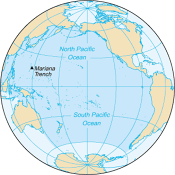
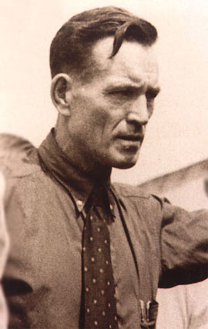
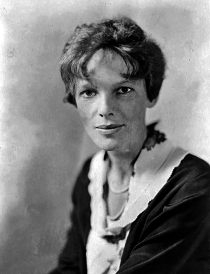
Amelia Earhart s last confirmed radio transmission crackled with static and urgency. "We are on the line 157 337," she reported to the Coast Guard cutter Itasca, attempting to locate tiny Howland Island in the central Pacific. The Itasca received her voice clearly but could not establish two-way communication. After that transmission on the morning of July 2, 1937, Earhart and navigator Fred Noonan were never heard from again. Earhart and Noonan were attempting the longest and most dangerous leg of a planned equatorial circumnavigation of the globe. They had departed Lae, New Guinea, roughly 22 hours earlier in a twin-engine Lockheed Electra, aiming for Howland Island, a flat coral strip barely two miles long and half a mile wide. The flight covered 2,556 miles of open ocean with no landmarks and limited navigational aids. The Itasca had been stationed at Howland specifically to guide Earhart in by radio. But a cascade of technical failures undermined the plan. Earhart s radio direction finder may have been malfunctioning. The Itasca s crew was transmitting on frequencies she apparently could not receive. Overcast skies prevented celestial navigation during the final approach. The margin for error over featureless ocean was effectively zero. The U.S. Navy launched the most expensive search in its history to that point, deploying the aircraft carrier Lexington, the battleship Colorado, and dozens of other vessels to comb 250,000 square miles of ocean. They found nothing. The search was called off on July 18. Earhart had already secured her place in aviation history before the final flight. She was the first woman to fly solo across the Atlantic in 1932, five years after Lindbergh s crossing. Her disappearance generated conspiracy theories that persist nearly nine decades later, but the most likely explanation remains the simplest: the Electra ran out of fuel and went down in the Pacific.
July 2, 1937
89 years ago
Key Figures & Places
What Else Happened on July 2
Valentinian III turned eighteen in 437, old enough to rule the Western Roman Empire alone. His mother Galla Placidia officially stepped back from her fifteen-ye…
Two brothers died in an ambush at the palace's north gate, arrows finding their marks before they could draw swords. Li Shimin killed them himself on July 2, 62…
Six bodies, three generations, one hillside. Emperor Zhongzong moved them all to Mount Liang in 706—his father Gaozong, his mother Wu Zetian (China's only femal…
Robert the Strong, Count of Anjou and the progenitor of the future Capetian dynasty, was killed fighting a combined Breton-Viking army at the Battle of Brissart…
The soldiers wouldn't wait for Constantinople's approval. On July 2, 963, the imperial army surrounded their brilliant general Nicephorus Phocas on the Cappadoc…
Albert I of Habsburg defeated Adolf of Nassau-Weilburg at the Battle of Göllheim, ending Adolf’s reign as King of the Romans. This victory secured the Habsburg …
Talk to History
Have a conversation with historical figures who witnessed this era. Ask questions, explore perspectives, and bring history to life.