Amistad Rebels Seize Ship: A Fight for Freedom
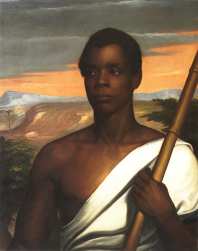
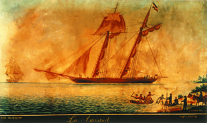
Fifty-three West Africans broke free from their chains in the hold of the schooner Amistad on a moonless night twenty miles off the coast of Cuba. Armed with sugar cane knives found in the cargo hold, they killed the ship s captain and cook, took control of the vessel, and demanded the surviving crew members sail them back to Africa. The date was July 2, 1839, and the revolt would trigger one of the most consequential legal battles in American history. The captives were Mende people from present-day Sierra Leone who had been kidnapped, transported to Havana, and sold in violation of an 1817 treaty between Spain and Britain that banned the Atlantic slave trade. Their leader, Sengbe Pieh — known in American courts as Joseph Cinque — was a rice farmer in his mid-twenties who organized the uprising and held the group together through months of legal limbo. The two surviving Spanish crew members, ordered to sail east toward Africa, secretly steered north at night. After nearly two months of erratic sailing, the Amistad was intercepted off Long Island by the USS Washington. The captives were taken to Connecticut and charged with murder and piracy, setting up a jurisdictional and diplomatic crisis. Spain demanded the return of its "property." Abolitionists rallied to the Africans defense. The case reached the United States Supreme Court in 1841, where former President John Quincy Adams, 73 years old and partially deaf, argued for the captives freedom in a legendary eight-hour presentation. Adams framed the case not as a property dispute but as a fundamental question of human rights. The Court ruled 7-1 that the Africans had been illegally enslaved and were free people who had acted in self-defense. Thirty-five survivors eventually returned to Sierra Leone in 1842. The Amistad case energized the abolitionist movement and exposed the moral bankruptcy of treating human beings as cargo.
July 2, 1839
187 years ago
Key Figures & Places

What Else Happened on July 2
Valentinian III turned eighteen in 437, old enough to rule the Western Roman Empire alone. His mother Galla Placidia officially stepped back from her fifteen-ye…
Two brothers died in an ambush at the palace's north gate, arrows finding their marks before they could draw swords. Li Shimin killed them himself on July 2, 62…
Six bodies, three generations, one hillside. Emperor Zhongzong moved them all to Mount Liang in 706—his father Gaozong, his mother Wu Zetian (China's only femal…
Robert the Strong, Count of Anjou and the progenitor of the future Capetian dynasty, was killed fighting a combined Breton-Viking army at the Battle of Brissart…
The soldiers wouldn't wait for Constantinople's approval. On July 2, 963, the imperial army surrounded their brilliant general Nicephorus Phocas on the Cappadoc…
Albert I of Habsburg defeated Adolf of Nassau-Weilburg at the Battle of Göllheim, ending Adolf’s reign as King of the Romans. This victory secured the Habsburg …
Talk to History
Have a conversation with historical figures who witnessed this era. Ask questions, explore perspectives, and bring history to life.