

Somme's First Day: 19,000 British Soldiers Killed
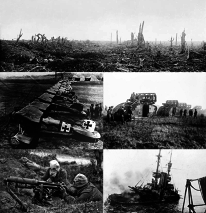
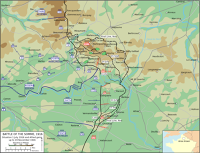
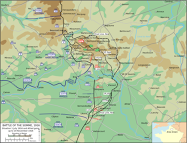
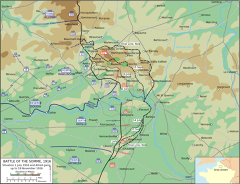
British commanders assured their troops that a week of artillery bombardment had obliterated German defenses along the Somme River. When whistles blew at 7:30 a.m. on July 1, 1916, soldiers climbed from their trenches carrying 70 pounds of equipment, expecting to walk across no man s land into empty positions. The German machine guns were waiting. The preliminary bombardment had fired 1.5 million shells over seven days, but a third were duds, and the shrapnel rounds couldn t penetrate the deep German dugouts carved into the chalk bedrock. When the barrage lifted, German soldiers emerged from shelters up to thirty feet underground, set up their Maxim guns, and opened fire on the advancing British waves. By nightfall, 19,240 British soldiers were dead and another 38,230 wounded — the single bloodiest day in British military history. Some battalions ceased to exist within minutes. The 1st Newfoundland Regiment lost 710 of 801 men in under half an hour. The Accrington Pals, a battalion of friends and neighbors from the same Lancashire town, was effectively wiped out, devastating an entire community back home. The catastrophe of July 1 did not end the battle. The Somme ground on for 141 days until November, eventually gaining roughly six miles of territory at a cost of over one million casualties across both sides. The British introduced the tank to warfare during the campaign in September, though the first models were mechanically unreliable and tactically misused. The Somme shattered the volunteer enthusiasm that had filled Kitchener s New Army. The men who survived the first day returned home with a permanent distrust of military authority that shaped British culture, literature, and politics for generations.
July 1, 1916
110 years ago
Key Figures & Places
What Else Happened on July 1
The prefect of Egypt controlled Rome's grain supply—and he knew it. Tiberius Julius Alexander, a Jewish apostate commanding two legions in Alexandria, declared …
Narses brought 20,000 men to face Totila's Ostrogoths at Busta Gallorum, near modern Gualdo Tadino. The Byzantine eunuch general was 74 years old. Totila, half …
Prince Bohemond of Taranto's Crusader forces routed Sultan Kilij Arslan I's Seljuk army at Dorylaeum, breaking open the road to the Holy Land during the First C…
The Castilian army marched 60,000 strong into Granada's Sierra Elvira on July 1st, 1431—the largest Christian force assembled in decades. King Juan II's troops …
Hernán Cortés lost 860 Spanish soldiers in a single night trying to sneak out of Tenochtitlan with stolen Aztec gold. June 30, 1520. The causeway bridges were g…
Hernán Cortés and his forces fled Tenochtitlan under the cover of darkness during the Noche Triste, suffering heavy casualties as Aztec warriors attacked them o…
Talk to History
Have a conversation with historical figures who witnessed this era. Ask questions, explore perspectives, and bring history to life.