
Einstein Publishes Relativity: Time and Space Redefined
A 26-year-old patent clerk in Bern submitted a paper that dismantled two centuries of Newtonian certainty about space and time. On June 30, 1905, Albert Einstein’s "On the Electrodynamics of Moving Bodies" arrived at the Annalen der Physik, introducing the special theory of relativity and proposing that the speed of light is constant for all observers, that time dilates and length contracts at high velocities, and that no absolute frame of reference exists in the universe. Einstein was working six days a week examining patent applications when he wrote the paper, having failed to secure an academic position after completing his doctorate. His day job reviewing patents for electromagnetic devices may have sharpened his thinking about the relationship between electricity, magnetism, and light, the very subjects his theory unified. The paper contained no footnotes, cited almost no prior work, and derived its conclusions from two simple postulates: the laws of physics are the same in all inertial frames, and the speed of light in vacuum is constant regardless of the motion of the source. The consequences were staggering. Einstein demonstrated that mass and energy are interchangeable, a relationship he expressed in a follow-up paper with the equation E=mc², arguably the most famous equation in history. Special relativity showed that time passes more slowly for objects moving at high speeds relative to a stationary observer, that objects contract in the direction of motion, and that simultaneity is relative: two events that appear simultaneous to one observer may occur at different times for another. The paper was one of four groundbreaking works Einstein published in 1905, his "miracle year." The others explained the photoelectric effect, which helped establish quantum mechanics, described Brownian motion, providing definitive evidence for the existence of atoms, and derived the mass-energy equivalence. A single year’s work by an unknown clerk revolutionized physics so completely that the discipline is still working out the implications more than a century later.
June 30, 1905
121 years ago
Key Figures & Places
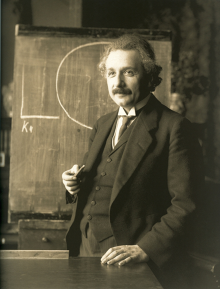
Albert Einstein
Wikipedia
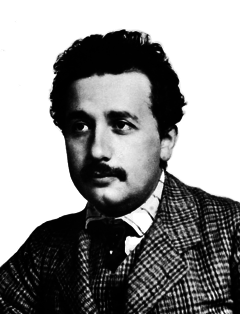
special relativity
Wikipedia
Annus Mirabilis Papers#Special relativity
Wikipedia
Albert Einstein
Wikipedia
Annus mirabilis papers
Wikipedia
Special relativity
Wikipedia
Annalen der Physik
Wikipedia
Annus mirabilis
Wikipedia
Lista de publicações científicas de Albert Einstein
Wikipedia
What Else Happened on June 30
He reportedly handed over sacred scriptures to Roman authorities during Diocletian's persecution — then sat on the throne of Saint Peter for eight years anyway.…
Troops loyal to the usurper Magnentius killed the rival claimant Nepotianus in Rome on June 30, 350 AD, ending his 28-day attempt to seize imperial power. Born …
Constantine V shattered the Bulgarian army at the Battle of Anchialus, securing a decisive victory that forced the Bulgarian Khan Telets to flee. This triumph s…
He was 21 years old and already doomed. Zhu Yunwen inherited the Ming throne from his grandfather Hongwu in 1398, becoming the Jianwen Emperor — and immediately…
Swiss pikemen held their ground against the heavily armored Milanese cavalry at Arbedo, proving that disciplined infantry could dismantle the traditional domina…
Hernán Cortés lost 800 soldiers, most of his cannons, and nearly his life in a single night. June 30, 1520 — the Noche Triste, the Night of Sorrows — Aztec warr…
Talk to History
Have a conversation with historical figures who witnessed this era. Ask questions, explore perspectives, and bring history to life.