

Space Shuttle Docks with Mir: American and Russian Stations Meet
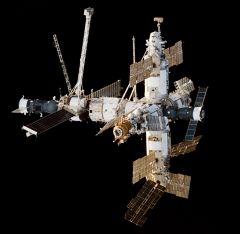
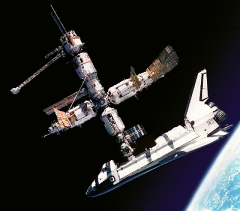
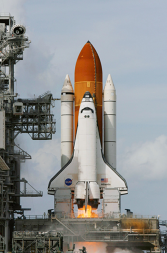
The Space Shuttle Atlantis docked with the Russian space station Mir on June 29, creating the largest spacecraft ever assembled in orbit at that moment. This historic union ended a twenty-year hiatus in U.S.-Russian cooperation by swapping crews and delivering vital supplies to the aging station. The mission successfully retrieved astronaut Norman Thagard while launching joint life sciences experiments that proved long-term international collaboration could sustain human presence in space.
June 29, 1995
31 years ago
Key Figures & Places
What Else Happened on June 29
Cao Rui was 22 when he inherited an empire still bleeding from his father's failures. Cao Pi had spent years chasing total conquest of China and died with nothi…
Cao Pi succumbed to illness, ending his seven-year reign as the first emperor of the Cao Wei dynasty. His son, Cao Rui, immediately ascended the throne, inherit…
Robert Ier devient roi de Francie occidentale (alternance sur ce trône de rois voire empereurs carolingiens et de comtes de Paris voire ducs (d'Île-) de(-)Franc…
Unzufriedene Slawen überfallen den Bischofssitz Havelberg. Der damit beginnende Slawenaufstand stoppt zwei Jahrhunderte lang die Christianisierung östlich der E…
Auf dem Hoftag in Rara (Rohr) übergibt Heinrich II. von Bayern den schon zum König gekrönten unmündigen dreijährigen Otto III. an Theophanu.
Der Benediktinermönch Bardo wird Erzbischof von Mainz.
Talk to History
Have a conversation with historical figures who witnessed this era. Ask questions, explore perspectives, and bring history to life.