Charles I Wins Cropredy Bridge: Last Royal Victory
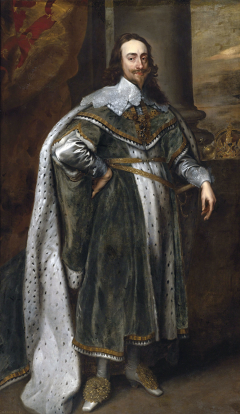
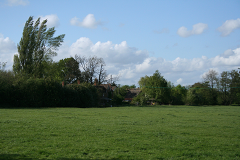
King Charles I personally rallied his cavalry and charged across a narrow stone bridge into a retreating Parliamentarian column, winning the last clear battlefield victory of his reign. At the Battle of Cropredy Bridge in Oxfordshire on June 29, 1644, Royalist forces caught a portion of the Earl of Essex’s army strung out across a river crossing and routed it, capturing eleven guns and several hundred prisoners. The English Civil War had entered its second year, and the military situation was turning against the king. Parliamentary forces controlled London, the navy, and most of the economically productive southeast. Charles’s strategy depended on keeping his dispersed field armies coordinated while preventing Parliament’s forces from combining against him. In June 1644, he was maneuvering through the Midlands with roughly 9,000 troops, attempting to avoid the larger army of Sir William Waller while staying close enough to threaten. The engagement at Cropredy Bridge was an encounter battle, not a planned action. Waller’s army was marching parallel to Charles along the opposite bank of the River Cherwell when Waller spotted a gap opening in the Royalist column and sent troops across the bridge to cut the army in half. The attack initially succeeded in isolating the Royalist rear guard, but Charles turned his main body around and counterattacked across the bridge while Lieutenant General Henry Wilmot struck the Parliamentary bridgehead from the flank. The pincer movement collapsed Waller’s position. Waller’s army disintegrated in the days following the battle, with thousands of soldiers deserting and his remaining force too demoralized to continue the campaign. The victory gave Charles temporary freedom of movement in the south, but he squandered the advantage by marching into the West Country to relieve Lyme Regis, a decision that allowed Parliamentary forces to regroup. Within a year, the New Model Army would crush the Royalist cause at Naseby, and Charles would begin the long retreat toward his trial and execution in January 1649.
June 29, 1644
382 years ago
Key Figures & Places

What Else Happened on June 29
Cao Rui was 22 when he inherited an empire still bleeding from his father's failures. Cao Pi had spent years chasing total conquest of China and died with nothi…
Cao Pi succumbed to illness, ending his seven-year reign as the first emperor of the Cao Wei dynasty. His son, Cao Rui, immediately ascended the throne, inherit…
Nur ad-Din Zangi crushed the Crusader army at the Battle of Inab, killing Prince Raymond of Poitiers and scattering his forces. This decisive victory shattered …
A devastating earthquake struck Syria, destroying large sections of Hama and Shaizar and severely damaging the Crusader fortress Krak des Chevaliers and the cat…
The Church refused to crown him. So Sverre crowned himself. A former Faroese priest with a disputed claim to the Norwegian throne, Sverre Sigurdsson had spent y…
Sverre didn't just become King of Norway — he became the man the Pope refused to recognize. He claimed descent from King Eystein II, a story many doubted, but h…
Talk to History
Have a conversation with historical figures who witnessed this era. Ask questions, explore perspectives, and bring history to life.