Truman Sends Troops to Korea: America Enters the War
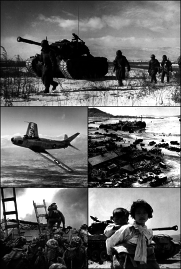
President Truman committed American military forces to combat in Korea without asking Congress for a declaration of war, establishing a precedent that would shape American foreign policy for the rest of the century. On June 27, 1950, two days after North Korea’s invasion of the South, Truman ordered U.S. air and naval forces to support South Korean troops and directed the Seventh Fleet to the Taiwan Strait to prevent the conflict from spreading to China. The decision was made in a series of emergency meetings at Blair House, the president’s temporary residence while the White House was being renovated. Truman and his advisors, including Secretary of State Dean Acheson and Secretary of Defense Louis Johnson, viewed the invasion as a test of American credibility. The lesson of the 1930s, when Western democracies failed to confront fascist aggression, dominated their thinking. Acheson argued that allowing South Korea to fall would embolden the Soviet Union to test Western resolve in Europe. Truman deliberately avoided requesting a declaration of war from Congress, calling the intervention a "police action" under United Nations authority. The UN Security Council had passed a resolution on June 25 urging member states to assist South Korea, with the Soviet Union absent from the vote due to its boycott over Chinese representation. Truman used this resolution as his legal basis, though constitutional scholars debated the president’s authority to commit troops without congressional approval. Ground forces followed on June 30, when Truman authorized General Douglas MacArthur to deploy Army units from Japan to Korea. The first American troops, Task Force Smith, engaged North Korean forces on July 5 and were quickly overrun, revealing how unprepared the occupation army in Japan was for combat. The Korean War would eventually draw in Chinese forces, kill more than 36,000 Americans, and establish the template for undeclared presidential wars that defined American military engagements from Vietnam through Afghanistan.
June 27, 1950
76 years ago
Key Figures & Places
What Else Happened on June 27
A city-state the size of a small county held off the Ottoman Empire, the Venetian Republic, and every other regional bully for centuries — through diplomacy, no…
Blacksmith Michael An Gof and lawyer Thomas Flamank met their ends at Tyburn after leading thousands of Cornishmen on a march to London to protest crushing war …
Amerigo Vespucci wasn't supposed to be famous. Columbus got there first, got the credit, got the statues. But Vespucci wrote better letters. His vivid accounts …
Thirteen Protestants perished at the stake in Stratford-le-Bow, condemned for refusing to renounce their faith during the Marian persecutions. This public execu…
Peter the Great shattered the Swedish Empire’s dominance at the Battle of Poltava, forcing Charles XII into exile in the Ottoman Empire. This decisive Russian v…
King George II personally led his troops into the fray at the Battle of Dettingen, securing a victory against the French. This engagement remains the final inst…
Talk to History
Have a conversation with historical figures who witnessed this era. Ask questions, explore perspectives, and bring history to life.