Slocum Circumnavigates Alone: First Solo Globe Voyage
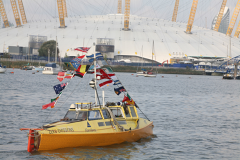
Joshua Slocum sailed into Fairhaven, Massachusetts, on June 27, 1898, completing a journey that every experienced mariner of his era considered suicidal. Over the course of three years, two months, and two days, the 54-year-old Nova Scotian had circumnavigated the globe alone aboard the Spray, a 36-foot oyster sloop he had rebuilt from a rotting hulk in a farmer’s field. Slocum departed Boston on April 24, 1895, with almost no money and equipment that professional sailors would have considered inadequate. The Spray had no engine, no modern navigation instruments beyond a cheap tin clock and a sextant, and no self-steering gear. Slocum navigated by dead reckoning and lunar observations, a method that had been obsolete for decades. He financed the voyage through lectures and book sales at ports along the way, often arriving nearly broke and leaving with just enough to reach the next stop. The voyage covered approximately 46,000 miles through some of the most dangerous waters on Earth. Slocum crossed the Atlantic twice, transited the Strait of Magellan through violent storms and encounters with hostile Fuegian natives who attempted to board the Spray at night, crossed the Pacific via Australia, rounded the Cape of Good Hope, and recrossed the Atlantic to reach home. He was alone for months at a stretch, with his longest time without seeing land lasting 72 days during the Pacific crossing. Slocum published "Sailing Alone Around the World" in 1900, and the book became a classic of adventure literature that inspired generations of solo sailors. His achievement was not repeated for more than sixty years. Slocum himself was lost at sea in November 1909, departing Martha’s Vineyard aboard the Spray for a planned voyage to South America and never seen again. No wreckage was ever found.
June 27, 1898
128 years ago
Key Figures & Places
What Else Happened on June 27
A city-state the size of a small county held off the Ottoman Empire, the Venetian Republic, and every other regional bully for centuries — through diplomacy, no…
Blacksmith Michael An Gof and lawyer Thomas Flamank met their ends at Tyburn after leading thousands of Cornishmen on a march to London to protest crushing war …
Amerigo Vespucci wasn't supposed to be famous. Columbus got there first, got the credit, got the statues. But Vespucci wrote better letters. His vivid accounts …
Thirteen Protestants perished at the stake in Stratford-le-Bow, condemned for refusing to renounce their faith during the Marian persecutions. This public execu…
Peter the Great shattered the Swedish Empire’s dominance at the Battle of Poltava, forcing Charles XII into exile in the Ottoman Empire. This decisive Russian v…
King George II personally led his troops into the fray at the Battle of Dettingen, securing a victory against the French. This engagement remains the final inst…
Talk to History
Have a conversation with historical figures who witnessed this era. Ask questions, explore perspectives, and bring history to life.