First Barcode Scanned: Retail Revolution Begins in Ohio
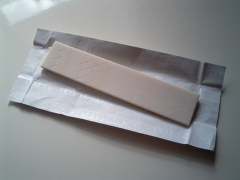
A cashier at a supermarket in Troy, Ohio, scanned a pack of Wrigley’s Juicy Fruit gum at 8:01 AM on June 26, 1974, and retail was never the same. The transaction at Marsh Supermarket was the first commercial use of a Universal Product Code barcode, a technology that had taken more than two decades to develop and would eventually process trillions of dollars in commerce worldwide. The barcode concept originated in 1948, when a Drexel University graduate student named Bernard Silver overheard a supermarket executive begging a dean for a way to automate checkout. Silver and his classmate Norman Joseph Woodland began experimenting with patterns of lines and dots, eventually patenting a circular bulls-eye design in 1952. But the technology to read the codes reliably and affordably did not exist. Laser scanners, the essential missing component, would not become commercially viable for another twenty years. The modern UPC barcode emerged from an industry-wide effort in the early 1970s. The grocery industry formed an ad hoc committee to select a standard symbol, and IBM engineer George Laurer designed the rectangular striped code that was ultimately adopted. The system assigned a unique twelve-digit number to every product, with the stripes encoding that number in a pattern readable by laser scanners at any angle. The Marsh Supermarket pilot was closely watched by the industry, which needed proof that the technology would actually speed up checkout and improve inventory tracking. Adoption was slow at first. Scanners were expensive, and manufacturers resisted the cost of printing codes on packaging. By 1978, fewer than one percent of American grocery stores had installed scanners. The tipping point came in the early 1980s, when large chains demonstrated that barcode scanning reduced checkout time by 30 percent and virtually eliminated pricing errors. Today, barcodes are scanned more than six billion times daily worldwide, and the technology spawned the QR codes, RFID tags, and supply chain tracking systems that define modern commerce.
June 26, 1974
52 years ago
Key Figures & Places
What Else Happened on June 26
Augustus didn't want Tiberius. He wanted his grandsons, Gaius and Lucius — young, bloodline-pure, the heirs he'd groomed for years. Both died young. So in 4 AD,…
Elagabalus adopted Alexander Severus because his grandmother forced him to. Julia Maesa had already decided her grandson was a disaster — too erratic, too stran…
Julian took a spear to the liver while retreating from Persia — and nobody knows who threw it. His own soldiers were suspects. The last pagan emperor of Rome ha…
Julian didn't die in battle — he died from a spear thrown by someone in his own retreating column. Nobody claimed credit. The Roman army was already falling apa…
Benedict II refused to wait. After his election in 683, he sat unconfirmed for nearly a year while messengers crossed the Mediterranean, bureaucrats shuffled pa…
The man chosen to lead the Catholic Church in 687 waited nearly a year to actually take the job. Benedict II was elected almost immediately after Leo II died, b…
Talk to History
Have a conversation with historical figures who witnessed this era. Ask questions, explore perspectives, and bring history to life.