

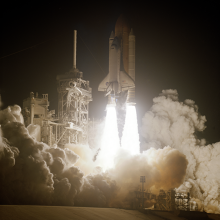
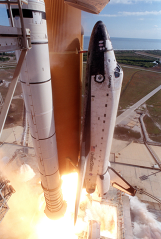
Columbia Launches for the Last Time: 16 Days Until Disaster
A routine mission. A perfect crew. Seven astronauts who'd trained for years, laughing through pre-flight checks, dreaming of discovery. But something tiny—a chunk of foam no bigger than a briefcase—would become their silent killer. When Columbia broke apart over Texas, scattering debris across an area larger than Rhode Island, it wasn't just a mechanical failure. It was human fragility against impossible physics. Rick Husband, William McCool, Michael Anderson, David Brown, Kalpana Chawla, Laurel Clark, and Ilan Ramon—their final moments a violent ballet of physics and chance, disintegrating 200,000 feet above the earth.
January 16, 2003
23 years ago
Key Figures & Places
What Else Happened on January 16
She ruled Egypt as a pharaoh when women weren't supposed to wear the crown. Hatshepsut dressed as a man, complete with a fake beard, to legitimize her power - a…
A skinny, sickly 35-year-old just transformed the entire Roman world with a single title. Octavian — now Augustus — wasn't a hulking warrior, but a strategic ge…
Siyaj K'ak' didn't just conquer. He obliterated. Marching from Teotihuacán with an army that moved like obsidian blades through jungle, he dismantled Tikal's ru…

The city crumbled not to thundering armies, but to a whispered promise. Totila—cunning Gothic king—didn't just storm Rome's walls, he bought them. Twelve gold-h…
The most powerful monarch in medieval Europe wasn't in Paris or Constantinople. He was in Spain. Abd-ar-Rahman III transformed a regional emirate into a dazzlin…
Ein Heer der Normannen unter Robert Guiskard nimmt die byzantinische Hafenstadt Durazzo ein.
Talk to History
Have a conversation with historical figures who witnessed this era. Ask questions, explore perspectives, and bring history to life.