
Senate Overrides Veto: Taft-Hartley Limits Union Power
Congress handed American labor its biggest legislative defeat in a generation and did it over the president’s veto. On June 23, 1947, the Senate voted 68 to 25 to override Harry Truman’s veto of the Taft-Hartley Act, following the House’s override three days earlier. The Labor Management Relations Act fundamentally restructured the balance of power between unions and employers that had been established by the Wagner Act of 1935. The political backdrop was a wave of massive strikes in 1945-46 that disrupted steel, coal, railroads, and meatpacking. More than five million workers walked off the job in 1946 alone, the largest strike wave in American history. Republicans swept the 1946 midterm elections with promises to rein in union power, and Senator Robert Taft of Ohio and Representative Fred Hartley of New Jersey crafted legislation that labor leaders would call a "slave labor bill." Taft-Hartley banned closed shops, where only union members could be hired, and allowed states to pass right-to-work laws prohibiting union security agreements. The law required union leaders to sign affidavits swearing they were not Communists, authorized the president to impose 80-day cooling-off periods on strikes that threatened national security, and barred unions from contributing to federal political campaigns. Truman’s veto message called the bill "a clear threat to the successful working of our democratic society." The override had lasting consequences. Right-to-work laws spread across the South and West, weakening union density in those regions for decades. The Communist affidavit requirement purged leftist organizers from the labor movement and aligned unions with Cold War foreign policy. Truman’s veto, though unsuccessful, cemented his support among union voters and helped fuel his upset victory in the 1948 presidential election.
June 23, 1947
79 years ago
Key Figures & Places
United States House of Representatives
Wikipedia
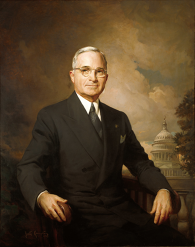
Harry Truman
Wikipedia
United States Senate
Wikipedia
veto
Wikipedia
Taft-Hartley Act
Wikipedia
United States Senate
Wikipedia
United States House of Representatives
Wikipedia
Harry S. Truman
Wikipedia
Veto power in the United States
Wikipedia
Taft–Hartley Act
Wikipedia
What Else Happened on June 23
He didn't wait for permission. Sun Quan had controlled the Yangtze River delta for decades, outlasting rivals who underestimated him, watching Cao Cao die, watc…
Minamoto Yorimasa and his allies clashed with the Taira clan at the Uji River, triggering the five-year Genpei War. This struggle ended the era of imperial cour…
The Genoese showed up to Trapani with more ships. They lost every single one. The War of Saint Sabas wasn't about saints — it was about trade routes, warehouse …
Granada's outnumbered army didn't retreat. They waited. At Moclín in 1280, Emir Muhammad II let the Castilian force chase them into the narrow passes of the Sie…
Castile sent 10,000 soldiers into the mountains near Moclín expecting a straightforward campaign. They walked into a trap. Granadan forces used the brutal terra…
The Treaty of Athis-sur-Orge forced the Flemish to pay crushing war indemnities and cede key territories to the French crown following their defeat at Mons-en-P…
Talk to History
Have a conversation with historical figures who witnessed this era. Ask questions, explore perspectives, and bring history to life.