

Jan Palach Burns: Prague Student Protests Soviet Invasion
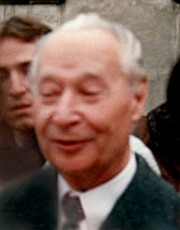
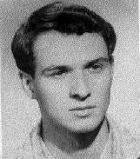
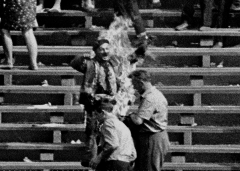
Jan Palach walked to the top of the steps at the National Museum in Wenceslas Square, Prague, on January 16, 1969, doused himself in gasoline, and set himself on fire. He was twenty years old, a history student at Charles University, and he was protesting the Soviet occupation of Czechoslovakia that had crushed the Prague Spring reforms seven months earlier. He died of his burns three days later. The Prague Spring had been a brief, exhilarating experiment in political liberalization. Alexander Dubcek, who became First Secretary of the Communist Party of Czechoslovakia in January 1968, had introduced reforms including freedom of the press, freedom of speech, and the right to travel abroad. He called it "socialism with a human face." The Soviet Union and its Warsaw Pact allies viewed the reforms as an existential threat to communist orthodoxy. On August 20-21, 1968, approximately 200,000 Warsaw Pact troops and 2,000 tanks invaded Czechoslovakia, occupying the country within hours. The invasion was met with nonviolent resistance. Citizens confronted soldiers in the streets, removed road signs to confuse military convoys, and broadcast underground radio reports. But the resistance could not overcome armored divisions. Dubcek was arrested, taken to Moscow, and forced to sign a protocol agreeing to the reversal of his reforms. By January 1969, a process of "normalization" was underway, restoring Soviet-style censorship and repression. Palach left letters explaining that he was part of a group that had drawn lots to determine who would sacrifice themselves to rouse the nation from its growing apathy. He called for a general strike and the end of press censorship. He was not the only one: Jan Zajic, another student, burned himself to death at the same location on February 25. Palach's funeral on January 25, 1969, drew hundreds of thousands of mourners to Prague in the largest public demonstration since the invasion. The communist authorities later had his body exhumed and cremated, and his grave site was placed under surveillance to prevent it from becoming a shrine. Twenty years later, on the anniversary of his death in January 1989, massive demonstrations at Wenceslas Square were violently suppressed by police, an event that became known as Palach Week and foreshadowed the Velvet Revolution that toppled communism in Czechoslovakia ten months later.
January 16, 1969
57 years ago
Key Figures & Places

Czech Republic
Wikipedia

Soviet Union
Wikipedia
Prague Spring
Wikipedia

Soviet
Wikipedia
Jan Palach
Wikipedia
self-immolation
Wikipedia
Prague
Wikipedia
Czechs
Wikipedia

Czech
Wikipedia

Jan Palach
Wikipedia

Self-immolation
Wikipedia

Prague
Wikipedia
Soviet Union
Wikipedia

Prague Spring
Wikipedia

Czechoslovakia
Wikipedia

Wenceslas Square
Wikipedia

Spacecraft
Wikipedia

Mstislav Rostropovich
Wikipedia

Geschichte der Tschechoslowakei
Wikipedia

Soyuz 4
Wikipedia

Soyuz 5
Wikipedia

Yevgeny Khrunov
Wikipedia

Aleksei Yeliseyev
Wikipedia

walk in space
Wikipedia
What Else Happened on January 16
She ruled Egypt as a pharaoh when women weren't supposed to wear the crown. Hatshepsut dressed as a man, complete with a fake beard, to legitimize her power - a…
A skinny, sickly 35-year-old just transformed the entire Roman world with a single title. Octavian — now Augustus — wasn't a hulking warrior, but a strategic ge…
Siyaj K'ak' didn't just conquer. He obliterated. Marching from Teotihuacán with an army that moved like obsidian blades through jungle, he dismantled Tikal's ru…
The city of Rome fell not to a thundering assault but to a whispered transaction. In 550 AD, the Ostrogothic King Totila recaptured Rome from the Byzantine garr…
The most powerful monarch in medieval Europe wasn't in Paris or Constantinople. He was in Spain. Abd-ar-Rahman III transformed a regional emirate into a dazzlin…
The Council of Nablus, held on January 16, 1120, produced the earliest surviving written laws of the Crusader Kingdom of Jerusalem, establishing legal framework…
Talk to History
Have a conversation with historical figures who witnessed this era. Ask questions, explore perspectives, and bring history to life.