

Prohibition Begins: Eighteenth Amendment Ratified
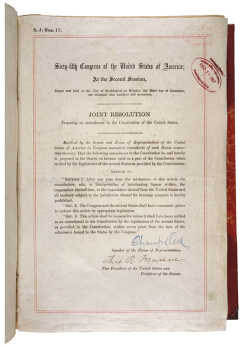
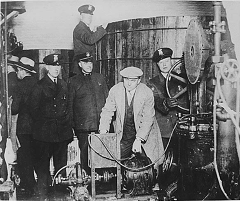
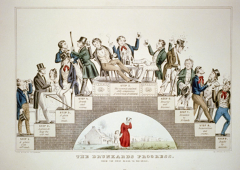
Nebraska became the thirty-sixth state to ratify the Eighteenth Amendment on January 16, 1919, crossing the three-fourths threshold required to write alcohol prohibition into the United States Constitution. The amendment would take effect one year later, on January 17, 1920, launching the most ambitious and controversial social experiment in American history. The temperance movement had been building for nearly a century. Protestant reformers, women's suffrage activists, and progressive politicians had long argued that alcohol was the root cause of poverty, domestic violence, and political corruption. The Anti-Saloon League, founded in 1893, became the most effective single-issue lobbying organization the country had ever seen, wielding the threat of electoral defeat against any politician who opposed prohibition. By 1916, twenty-three of forty-eight states had already enacted their own dry laws. World War I provided the final push. Anti-German sentiment allowed prohibitionists to attack the brewing industry as fundamentally un-American. Budweiser, Pabst, Schlitz, and other major breweries were owned by German-American families. Grain conservation for the war effort offered a practical argument to complement the moral one. Congress passed the amendment in December 1917, and state legislatures ratified it with remarkable speed. The Volstead Act, which provided the enforcement mechanism, defined "intoxicating liquor" as any beverage containing more than 0.5 percent alcohol, a threshold far stricter than many supporters had anticipated. The law banned the manufacture, sale, and transportation of alcohol but not its consumption, creating a legal framework riddled with loopholes. The results were catastrophic. Organized crime syndicates, led by figures like Al Capone in Chicago, built vast bootlegging empires. Speakeasies replaced saloons. Corruption permeated law enforcement at every level. Alcohol consumption initially declined but rebounded within a few years, and the quality of illegally produced liquor caused thousands of poisoning deaths. Federal enforcement was underfunded and overwhelmed. The experiment lasted thirteen years. The Twenty-First Amendment, ratified on December 5, 1933, repealed prohibition, making the Eighteenth the only constitutional amendment ever reversed. The noble experiment, as Herbert Hoover called it, proved that the Constitution could outlaw a behavior but could not eliminate the demand for it.
January 16, 1919
107 years ago
Key Figures & Places

What Else Happened on January 16
She ruled Egypt as a pharaoh when women weren't supposed to wear the crown. Hatshepsut dressed as a man, complete with a fake beard, to legitimize her power - a…
A skinny, sickly 35-year-old just transformed the entire Roman world with a single title. Octavian — now Augustus — wasn't a hulking warrior, but a strategic ge…
Siyaj K'ak' didn't just conquer. He obliterated. Marching from Teotihuacán with an army that moved like obsidian blades through jungle, he dismantled Tikal's ru…
The city of Rome fell not to a thundering assault but to a whispered transaction. In 550 AD, the Ostrogothic King Totila recaptured Rome from the Byzantine garr…
The most powerful monarch in medieval Europe wasn't in Paris or Constantinople. He was in Spain. Abd-ar-Rahman III transformed a regional emirate into a dazzlin…
The Council of Nablus, held on January 16, 1120, produced the earliest surviving written laws of the Crusader Kingdom of Jerusalem, establishing legal framework…
Talk to History
Have a conversation with historical figures who witnessed this era. Ask questions, explore perspectives, and bring history to life.