Iceland Becomes Republic: Independence from Denmark
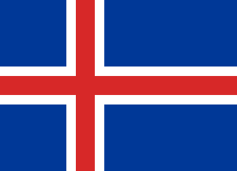
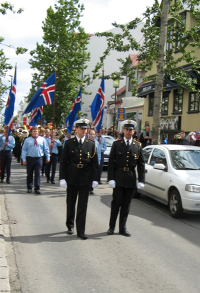
Iceland formally dissolved its union with Denmark on June 17, 1944, establishing the Republic of Iceland through a national referendum that passed with 97 percent approval. The date was chosen to honor the birthday of Jon Sigurdsson, the nineteenth-century leader of Iceland's independence movement. The ceremony took place at Thingvellir, the site of the Althing, Iceland's parliament founded in 930 AD and one of the oldest legislative assemblies in the world. The timing was deliberate and opportunistic. Denmark had been under Nazi German occupation since April 1940, making it unable to oppose Icelandic independence or exercise the authority it retained under the 1918 Act of Union, which had granted Iceland sovereignty but maintained a shared monarch. Iceland had operated as a de facto independent state throughout the war, hosting first British and then American military forces that recognized Icelandic self-governance. The Danish king, Christian X, sent a telegram of congratulations, though his actual feelings about the situation were reportedly less gracious. Iceland's path to independence had been gradual. Ruled by Norway from 1262 and then by Denmark after the Kalmar Union, Iceland had spent centuries as one of Europe's poorest territories, its population decimated by volcanic eruptions, epidemics, and the Little Ice Age. The independence movement gained momentum in the nineteenth century, fueled by Romantic nationalism and Sigurdsson's advocacy. Home rule was granted in 1904, sovereignty in 1918. The new republic's first president, Sveinn Bjornsson, took office at the Thingvellir ceremony in driving rain before roughly 20,000 attendees, a significant portion of Iceland's total population of approximately 128,000. The American and British military presence during the war had brought infrastructure investment, employment, and foreign currency that transformed Iceland's economy from subsistence fishing and farming into one of the world's most prosperous nations within a generation.
June 17, 1944
82 years ago
Key Figures & Places
What Else Happened on June 17
A pope was arrested for refusing to say Christ had only one will. That was the crime. Martin I had convened the Lateran Council in 648, gathering 105 bishops to…
King Louis IX ordered the public incineration of twenty-four carriage loads of Talmudic manuscripts in Paris, following a rigged trial against Jewish scholars. …
Finland's most important medieval church almost didn't happen in Turku at all. Bishop Magnus I had been working for decades to establish a permanent cathedral f…
One woman ruled three kingdoms without ever holding the title of queen. Margaret I engineered the Kalmar Union in 1397, binding Denmark, Norway, and Sweden unde…
Vlad III rode straight into the Ottoman camp with 7,000 men at night, hunting one specific person: Mehmed II, the conqueror of Constantinople. He got close. Not…
King Henry VII’s royal army crushed the Cornish rebels at Deptford Bridge, ending their march on London. By dismantling this tax-driven uprising, the King secur…
Talk to History
Have a conversation with historical figures who witnessed this era. Ask questions, explore perspectives, and bring history to life.