Statue of Liberty Dedication: Freedom Welcomes the World
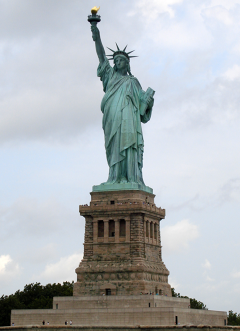
The Statue of Liberty arrived in New York Harbor on June 17, 1885, packed in 214 wooden crates aboard the French frigate Isere after a rough Atlantic crossing. The copper-skinned figure, 151 feet tall and weighing 225 tons, had been designed by sculptor Frederic Auguste Bartholdi and engineered by Alexandre Gustave Eiffel, whose iron framework would support the exterior copper sheets just as his later tower in Paris would rely on similar structural principles. The statue was a gift from the people of France to the United States, conceived to celebrate republican values and the Franco-American alliance. The project had been plagued by funding problems on both sides of the Atlantic. The French Committee of the Franco-American Union, chaired by Edouard de Laboulaye, raised money through lotteries, entertainments, and public subscription to pay for the statue itself. American fundraising for the granite pedestal stalled badly. Congress refused to appropriate funds. Multiple states declined to contribute. Joseph Pulitzer, publisher of the New York World, launched a campaign shaming wealthy Americans for their indifference, eventually raising $100,000 through small donations from over 120,000 contributors, most giving less than a dollar. Bartholdi's design was inspired by the Colossus of Rhodes and the Roman goddess Libertas. The seven rays of the crown represent the seven continents and oceans. The broken chain at Liberty's feet, often overlooked, symbolizes abolition and freedom from oppression. The tablet in her left hand bears the date July 4, 1776, in Roman numerals. The statue was dedicated on October 28, 1886, in a ceremony presided over by President Grover Cleveland. Emma Lazarus's sonnet "The New Colossus," containing the lines "Give me your tired, your poor, your huddled masses yearning to breathe free," was written for a fundraising auction in 1883 and mounted on the pedestal's interior wall in 1903.
June 17, 1885
141 years ago
Key Figures & Places
What Else Happened on June 17
A pope was arrested for refusing to say Christ had only one will. That was the crime. Martin I had convened the Lateran Council in 648, gathering 105 bishops to…
King Louis IX ordered the public incineration of twenty-four carriage loads of Talmudic manuscripts in Paris, following a rigged trial against Jewish scholars. …
Finland's most important medieval church almost didn't happen in Turku at all. Bishop Magnus I had been working for decades to establish a permanent cathedral f…
One woman ruled three kingdoms without ever holding the title of queen. Margaret I engineered the Kalmar Union in 1397, binding Denmark, Norway, and Sweden unde…
Vlad III rode straight into the Ottoman camp with 7,000 men at night, hunting one specific person: Mehmed II, the conqueror of Constantinople. He got close. Not…
King Henry VII’s royal army crushed the Cornish rebels at Deptford Bridge, ending their march on London. By dismantling this tax-driven uprising, the King secur…
Talk to History
Have a conversation with historical figures who witnessed this era. Ask questions, explore perspectives, and bring history to life.