Shah Jahan Builds Taj Mahal for Lost Love
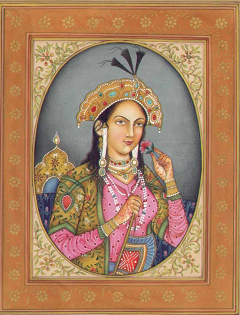
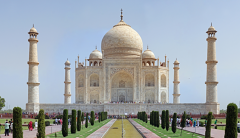
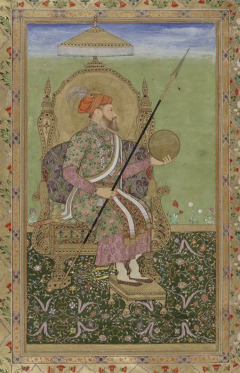
Mumtaz Mahal died giving birth to her fourteenth child on June 17, 1631, in a military camp at Burhanpur. Her husband, Mughal Emperor Shah Jahan, was reportedly so devastated that his hair turned gray within months. He spent the next seventeen years and the modern equivalent of roughly one billion dollars building her mausoleum, a structure that would become the most recognized building on Earth. Mumtaz Mahal, born Arjumand Banu Begum, had married Shah Jahan in 1612 and served as his trusted political advisor for nearly two decades. She traveled with him on military campaigns, reviewed state documents, and wielded considerable influence at court. Her death at age thirty-eight, from postpartum hemorrhage during the birth of daughter Gauhara Begum, reportedly left the emperor unable to conduct state business for a week. Construction of the Taj Mahal began in 1632 on the southern bank of the Yamuna River in Agra. The project employed roughly 20,000 artisans and laborers under the supervision of architects led by Ustad Ahmad Lahauri. Materials were sourced from across Asia: white marble from Rajasthan, jade and crystal from China, turquoise from Tibet, lapis lazuli from Afghanistan, sapphires from Sri Lanka, and carnelian from Arabia. The central dome rises 240 feet above the gardens. The complex includes a mosque, a guest house, formal gardens in the Persian chahar bagh style, and a massive gateway. The mausoleum's white marble facade changes color with the light: pinkish at dawn, brilliant white at midday, golden in moonlight. Shah Jahan was eventually deposed by his son Aurangzeb in 1658 and spent his final eight years imprisoned in Agra Fort, where he could see the Taj Mahal from his window. He was buried beside Mumtaz Mahal upon his death in 1666, the only asymmetrical element in the otherwise perfectly balanced complex.
June 17, 1631
395 years ago
Key Figures & Places
What Else Happened on June 17
A pope was arrested for refusing to say Christ had only one will. That was the crime. Martin I had convened the Lateran Council in 648, gathering 105 bishops to…
King Louis IX ordered the public incineration of twenty-four carriage loads of Talmudic manuscripts in Paris, following a rigged trial against Jewish scholars. …
Finland's most important medieval church almost didn't happen in Turku at all. Bishop Magnus I had been working for decades to establish a permanent cathedral f…
One woman ruled three kingdoms without ever holding the title of queen. Margaret I engineered the Kalmar Union in 1397, binding Denmark, Norway, and Sweden unde…
Vlad III rode straight into the Ottoman camp with 7,000 men at night, hunting one specific person: Mehmed II, the conqueror of Constantinople. He got close. Not…
King Henry VII’s royal army crushed the Cornish rebels at Deptford Bridge, ending their march on London. By dismantling this tax-driven uprising, the King secur…
Talk to History
Have a conversation with historical figures who witnessed this era. Ask questions, explore perspectives, and bring history to life.