

Soweto Uprising: Students March Against Apartheid
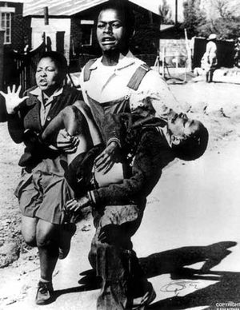
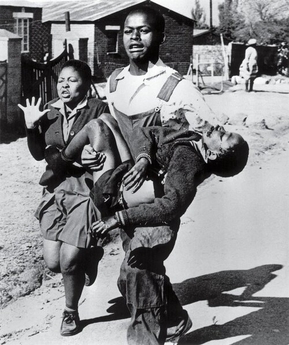
South African police opened fire on a crowd of Black schoolchildren marching through Soweto on June 16, 1976, killing thirteen-year-old Hector Pieterson among the first casualties. The students, estimated at between ten thousand and twenty thousand, had gathered to protest a government decree requiring half their instruction to be conducted in Afrikaans, the language of the white Afrikaner minority that most Black South Africans associated directly with apartheid oppression. The march began peacefully. Police responded with tear gas, then bullets. The Afrikaans instruction mandate, issued by the Bantu Education Department in 1974, was the immediate trigger, but student anger had been building for years. Bantu Education, implemented in 1953, was designed explicitly to prepare Black South Africans for lives as laborers. Prime Minister Hendrik Verwoerd had stated its purpose plainly: "There is no place for the Bantu in the European community above the level of certain forms of labour." Schools were underfunded, overcrowded, and staffed by teachers with minimal training. The Afrikaans requirement added linguistic humiliation to systemic deprivation. The photograph of Hector Pieterson's body being carried by another student, Mbuyisa Makhubu, with Pieterson's sister Antoinette running alongside, became the most iconic image of anti-apartheid resistance. Sam Nzima's photograph appeared on front pages worldwide and transformed international perceptions of the South African government. The uprising spread to other townships and continued for months, with police killing an estimated 176 to over 700 people, depending on the source. Soweto radicalized a generation of Black South Africans who had grown up under Bantu Education. Thousands of young people fled the country and joined the African National Congress and Pan Africanist Congress in exile. June 16 is now a public holiday in South Africa, designated Youth Day.
June 16, 1976
50 years ago
Key Figures & Places
South Africa
Wikipedia
Soweto uprising
Wikipedia
Soweto
Wikipedia
Soweto uprising
Wikipedia

Soweto
Wikipedia
South Africa
Wikipedia
Hector Pieterson
Wikipedia

African Union
Wikipedia
12 mars
Wikipedia

Zambia
Wikipedia
14 de abril
Wikipedia

Angola
Wikipedia
12 août
Wikipedia

Township (Südliches Afrika)
Wikipedia
Afrikaans
Wikipedia
Tsietsi Mashinini
Wikipedia

Histoire de l'Afrique du Sud
Wikipedia
Black people
Wikipedia

Apartheid
Wikipedia
What Else Happened on June 16
Julian burned his own ships. Not the enemy's — his own 1,100-vessel supply fleet, torched on the Tigris because advisors convinced him they couldn't defend it d…
Yazdegerd III ascended the Sasanian throne at just eight years old, inheriting a Persian Empire already fractured by civil war and plague. His reign coincided w…
Father and son, both kings, both captured on the same day. Hồ Quý Ly had seized Vietnam's throne in 1400 by forcing out the Trần dynasty after centuries of rule…
Ten-year-old Lambert Simnel was crowned King of England in Dublin — a baker's son, coached by a priest, dressed in borrowed robes. Henry VII's army met the York…
The last battle of the Wars of the Roses wasn't Bosworth. Most people think it was. But two years after Richard III died in a ditch, a ten-year-old boy named La…
Mary, Queen of Scots, disinherited her Protestant son, James VI, and formally named Philip II of Spain as her successor to the English throne. This desperate ga…
Talk to History
Have a conversation with historical figures who witnessed this era. Ask questions, explore perspectives, and bring history to life.