

Joyce Meets Barnacle: Bloomsday's Origin Story Begins
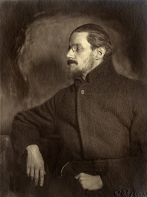
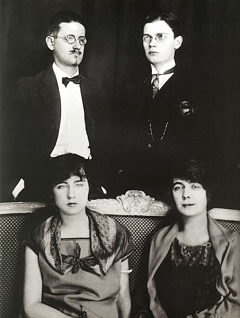
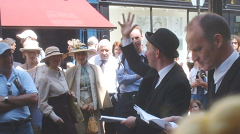
James Joyce met Nora Barnacle on June 10, 1904, when she was working as a chambermaid at Finn's Hotel in Dublin. Their first date, a walk to Ringsend on June 16, became the most celebrated day in literary history. Joyce set the entire action of his novel Ulysses on that date, transforming an ordinary Dublin Thursday into a monument to the woman who shaped his life and art more than any other. June 16 is now known worldwide as Bloomsday, after the novel's protagonist Leopold Bloom. Nora was from Galway, self-educated, sharp-tongued, and spectacularly unimpressed by literary pretension. Joyce, a twenty-two-year-old aspiring writer with a university education and an enormous ego, was captivated by her directness. Within months, they left Ireland together for continental Europe, living in Trieste, Zurich, and Paris for the rest of their lives. They did not marry until 1931, twenty-seven years after their first date, primarily for the legal protection of their two children. Ulysses, published in Paris by Sylvia Beach's Shakespeare and Company on February 2, 1922, follows Leopold Bloom through a single day in Dublin, paralleling the structure of Homer's Odyssey. The novel revolutionized English prose with its stream-of-consciousness technique, encyclopedic range, and frank treatment of sexuality and bodily functions. Its final chapter, Molly Bloom's soliloquy, was modeled significantly on Nora's speech patterns, personality, and letters. The book was banned in the United States for obscenity until a landmark 1933 court ruling by Judge John M. Woolsey. Bloomsday celebrations now take place in Dublin and cities worldwide on June 16 each year, with participants retracing Bloom's route, reading passages aloud, and eating the kidney that Bloom prepares for breakfast. Joyce would likely have found the devotional atmosphere both gratifying and absurd.
June 16, 1904
122 years ago
Key Figures & Places



What Else Happened on June 16
Julian burned his own ships. Not the enemy's — his own 1,100-vessel supply fleet, torched on the Tigris because advisors convinced him they couldn't defend it d…
Yazdegerd III ascended the Sasanian throne at just eight years old, inheriting a Persian Empire already fractured by civil war and plague. His reign coincided w…
Father and son, both kings, both captured on the same day. Hồ Quý Ly had seized Vietnam's throne in 1400 by forcing out the Trần dynasty after centuries of rule…
Ten-year-old Lambert Simnel was crowned King of England in Dublin — a baker's son, coached by a priest, dressed in borrowed robes. Henry VII's army met the York…
The last battle of the Wars of the Roses wasn't Bosworth. Most people think it was. But two years after Richard III died in a ditch, a ten-year-old boy named La…
Mary, Queen of Scots, disinherited her Protestant son, James VI, and formally named Philip II of Spain as her successor to the English throne. This desperate ga…
Talk to History
Have a conversation with historical figures who witnessed this era. Ask questions, explore perspectives, and bring history to life.