

First Rose Bowl Played: College Football Tradition Born
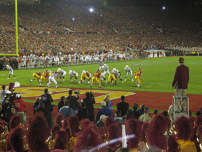
Michigan beat Stanford 49-0, and Stanford''s captain asked to end the game with eight minutes remaining on the clock. The first Rose Bowl, played on January 1, 1902, was such a lopsided humiliation that Tournament of Roses organizers replaced football with chariot racing the following year. Actual chariot racing, with horses and chariots, which continued until 1916 when football was reluctantly brought back. The Tournament of Roses parade had been running since 1890, a celebration of Southern California''s mild winter weather organized by the Valley Hunt Club of Pasadena. Adding a football game was an afterthought intended to draw larger crowds. Michigan''s "Point-a-Minute" team under coach Fielding Yost had outscored opponents 501-0 during the regular season. Stanford was overmatched from the opening whistle. Michigan scored eleven touchdowns at a time when touchdowns were worth five points each. About 8,000 spectators watched from a makeshift field at Tournament Park, a modest venue that would eventually be replaced by the Rose Bowl stadium in 1923. That stadium now seats over 90,000 and hosts one of the most prestigious games in college football. The parade draws 700,000 people to the streets and a television audience of tens of millions. The event''s unlikely survival shaped American sports culture in ways its founders never anticipated. The Rose Bowl became the model for every postseason bowl game that followed: the Sugar Bowl, the Orange Bowl, the Cotton Bowl. College football''s entire postseason structure descends from a 1902 exhibition game so badly mismatched that the organizers tried to replace it with Roman-era horse racing.
January 1, 1902
124 years ago
Key Figures & Places




What Else Happened on January 1
Roman consuls began their year in office on January 1 for the first time in 153 BC. Before that, they'd taken power on March 15. The change happened because Rom…
The Julian calendar takes effect as the civil calendar of the Roman Empire, establishing January 1 as the new date of the new year. That was -45.
The Roman Senate posthumously deifies Julius Caesar. That was -42.
The Roman legions stationed in Germania Superior refused to swear their annual oath of loyalty to Emperor Galba, triggering a revolt that quickly spread to neig…
January 1, 153. Roman consuls begin their year in office.
The Senate chooses Pertinax against his will to succeed Commodus as Roman emperor. That was 193.
Talk to History
Have a conversation with historical figures who witnessed this era. Ask questions, explore perspectives, and bring history to life.