Goodyear's Patent: Vulcanization Transforms Rubber Industry
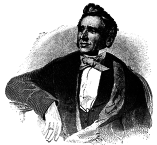
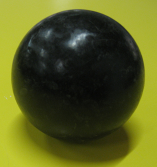
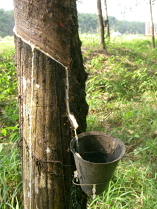
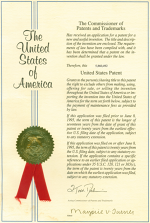
Charles Goodyear received U.S. Patent No. 3,633 on June 15, 1844, for the vulcanization of rubber, a process he had stumbled upon accidentally in 1839 after five years of obsessive, financially ruinous experimentation. Before vulcanization, natural rubber was commercially useless for most purposes. Products made from it melted in summer heat, cracked in winter cold, and decomposed into sticky, foul-smelling masses. Goodyear's process of heating rubber with sulfur produced a material that was durable, elastic, and stable across temperature extremes. Goodyear's path to the discovery was spectacularly difficult. He began experimenting with rubber in the early 1830s after buying a rubber life preserver from the Roxbury India Rubber Company and deciding he could improve it. Over the following years, he exhausted his savings, sold his children's schoolbooks, pawned the family's belongings, and was imprisoned multiple times for unpaid debts. His family endured severe poverty while he pursued one failed rubber treatment after another, mixing the material with magnesium, quicklime, nitric acid, and various other substances. The breakthrough came when Goodyear accidentally dropped a piece of rubber mixed with sulfur onto a hot stove in his workshop. Instead of melting, the rubber charred at the edges but remained flexible and stable in the center. Goodyear spent the next five years refining the temperature and proportions required for consistent results before securing his patent. Goodyear never profited significantly from his invention. Thomas Hancock in England independently developed a vulcanization process and patented it in Britain eight weeks before Goodyear could file there. Patent infringement battles consumed Goodyear's remaining years and finances. He died in 1860 owing approximately $200,000 in debts. The Goodyear Tire and Rubber Company, founded in 1898, was named in his honor but had no connection to his family.
June 15, 1844
182 years ago
Key Figures & Places
What Else Happened on June 15
Assyrian astronomers recorded a total solar eclipse on June 15, 763 BC, noting the event in the limmu lists of King Ashur-dan III. This precise observation prov…
Pope Sergius II anointed Louis II as King of Italy in Rome, formalizing the Carolingian grip on the Italian peninsula. This coronation solidified the alliance b…
Robert I won the battle and still lost everything. He defeated Charles the Simple's forces at Soissons in 923, then took an arrow or sword blow — accounts disag…
The fleet that decided Norway's future wasn't won by numbers — Sverre's Birkebeiner force was massively outnumbered. But Sverre had a trick: he rammed Magnus's …
King Magnus V fell in the freezing waters of Sognefjord during the Battle of Fimreite, ending his long struggle for the Norwegian throne. His defeat cleared the…
King John affixed his seal to the Magna Carta at Runnymede, bowing to pressure from rebellious barons to curb his absolute power. This charter established the p…
Talk to History
Have a conversation with historical figures who witnessed this era. Ask questions, explore perspectives, and bring history to life.